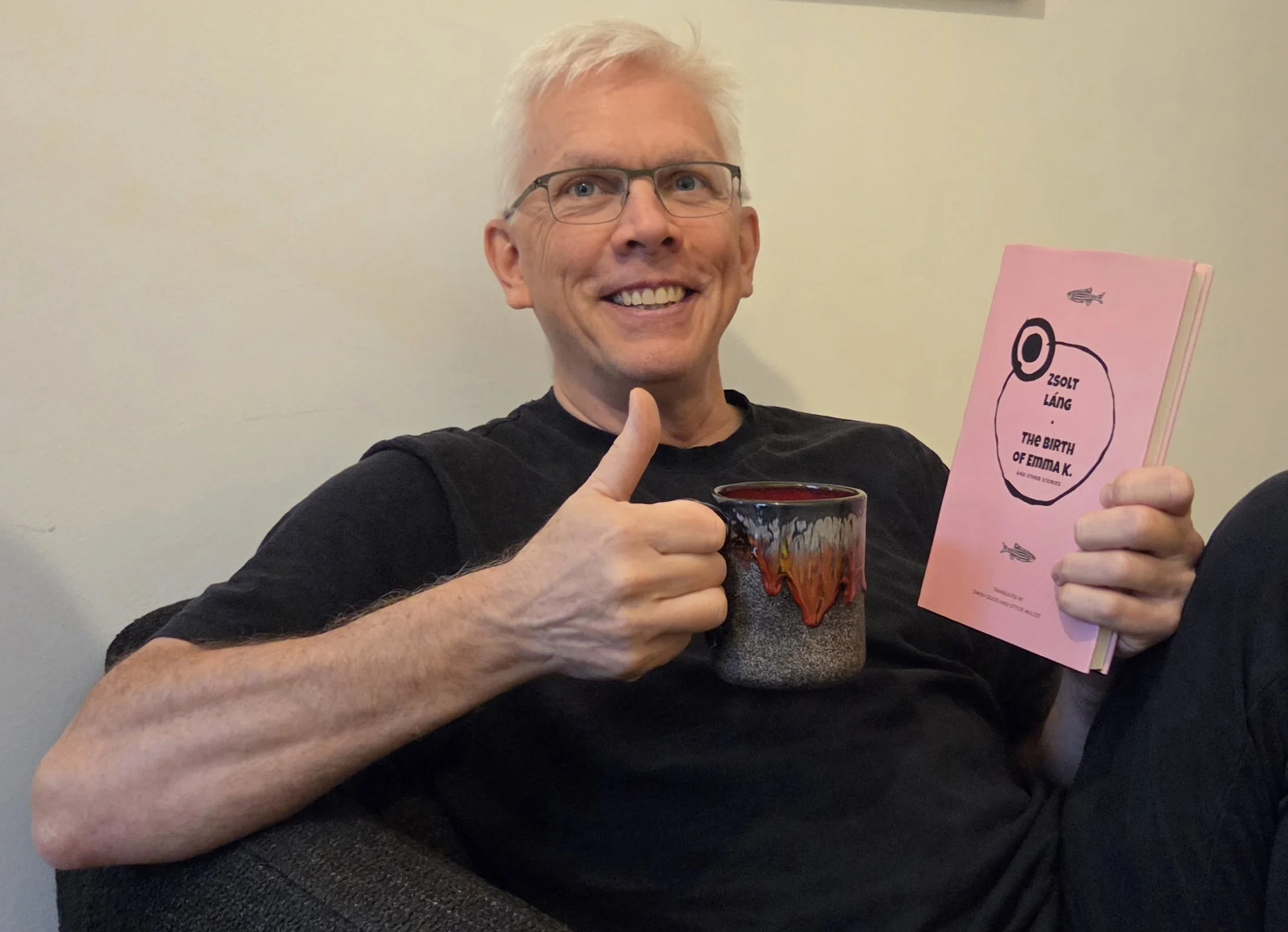
The Birth of Emma K. and Other Stories, Zsolt Láng, 2023, translated from the Hungarian by Owen Good & Ottilie Mulzet, 2023.
Often, while reading these stories, I was lost as to what was going on. It turns out, though, this uncertainty is partly what makes these stories so beautiful. Strange characters in strange settings and situations feed the uncertainty and kept my interest high as each story unfolded. The first story in the collection begins with ‘Our Lord’ sitting on a hill in Budapest contemplating who gave him the power to create the world. While this never gets resolved, we see him wrestle with his problem throughout the narrative, which seemingly has nothing to do with him. Lang describes this approach in the later story Chestnut where the narrator states, ‘We could go on in this banal but well-oiled style, because the external events aren’t important, rather it’s the invisible line of force of the internal happenings that guides the thread, woven from these sentences into a new pattern.’
Another invisible aspect of each story is an observer, sometimes seen but often not. He or she may be observing from a window or while sitting at a bus stop. We never learn if the observer is the narrator or simply a bystander but it is a powerful tool within the narrative, like the reader is sharing the observation, living alongside the characters and their ruminations. The story Loneliness takes place entirely at rubbish bin with the protagonist, Ildiko, standing by the bin while being observed by a stranger several floors above her. The narrative involves her observations, thoughts, and memories while taking out the trash but we know there is someone watching her and this ads a bit of menace and again, uncertainty to the story.
How The Birth of Emma K. informs my writing.
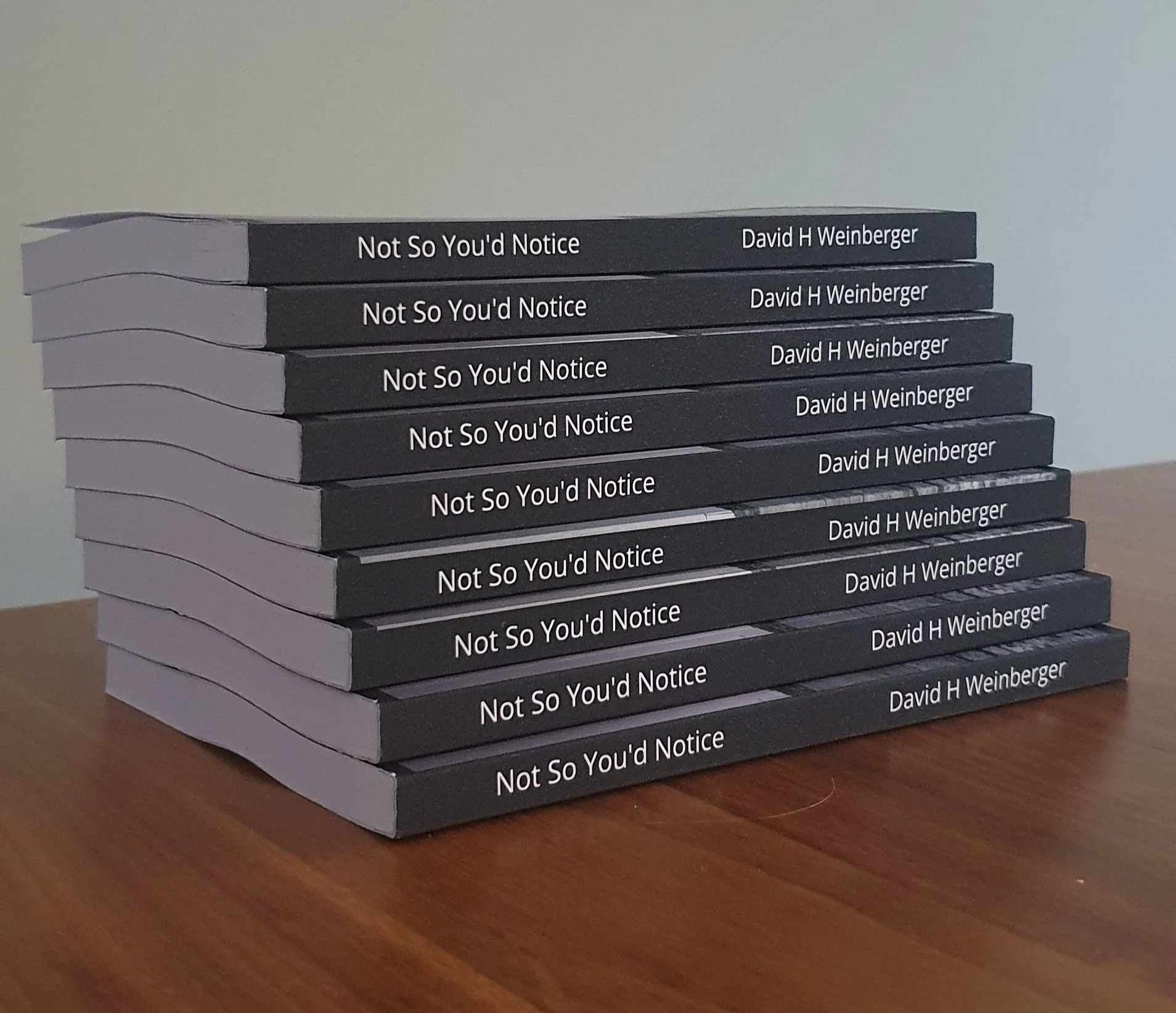
I found this collection intriguing and incredibly enjoyable. Not sure how I could pull off Lang’s style as I do not completely understand his accomplishment. However, I have experimented with the style in my stories such as Tiny Points of Contact and The Remove, both included in my collection Not So You’d Notice which is available at Amazon. In the former, the plot basically involves a kayak outing to observe manatees but there is a lot more going on in the protagonist’s head. And in the latter, the protagonist begins a car collection but it is what he is struggling with internally that holds greater importance.
Lang’s collection is worthy of a second read: for pure enjoyment but also to investigate his artistry, his building of a philosophical view of the world, and the comfort of dwelling in uncertainty.





Quisque iaculis facilisis lacinia. Mauris euismod pellentesque tellus sit amet mollis.