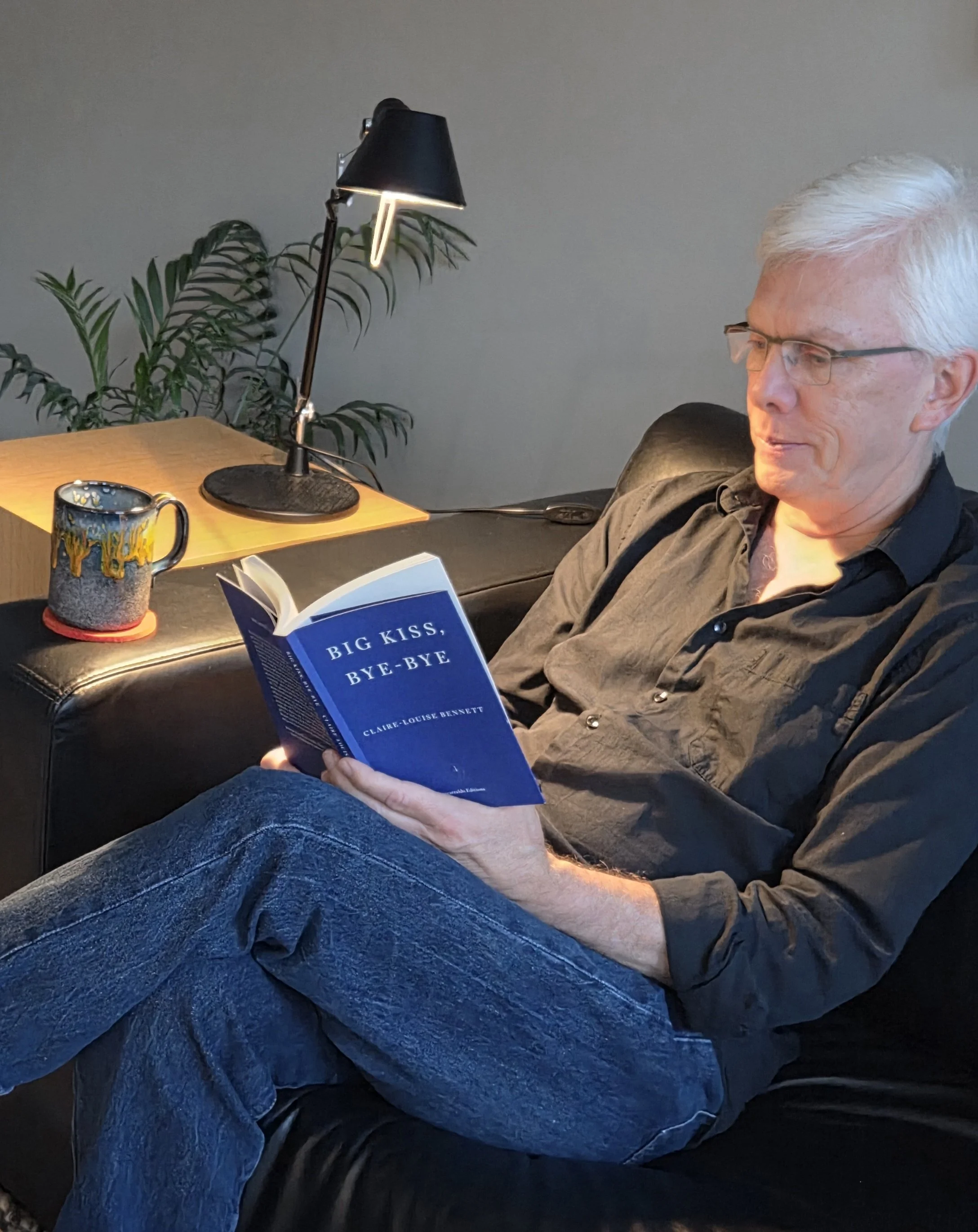
Big Kiss, Bye-Bye, Claire-Louise Bennett, 2025.
Bennett is labelled an avant garde author so she fits in well with the reading I have recently been doing. I’ve read her short story collection Pond twice and found her latest novel to be well worth the reading effort. The novel primarily consists of the unnamed narrator’s ruminations on her past relationships with men, as well as analyses of current relationships with friends and neighbors. The major focus of thought is the internal wrestling with words and phrases that people deal with as they engage with others. The narrator explores the difficulty of knowing what to say to others and how to say it, including the ramifications of the things we say and how we deliver our message. It is an incredibly engaging study with a fair amount of humor when she agonizes over the most every day, common exchanges.
Along the way there are some great insights expressed by the narrator such as her discussion of the pros and cons of relational pleasantness, and in one of my favorite sections, the depiction of violent behavior on film. She also addresses feelings throughout the novel, both the difficulty in adequately expressing them and the impossibility of understanding the depth of others’ feelings. All in all, an enjoyable read leaving me wanting to read Bennett’s first novel, Checkout 19.





Quisque iaculis facilisis lacinia. Mauris euismod pellentesque tellus sit amet mollis.