• About
  • Publications
  • Blog
  • Writing
  • Reading
  • Travel
Menu

David H Weinberger

Street Address
Exploring writing, reading, and traveling.
Phone Number
Engaging through stories.

Your Custom Text Here

David H Weinberger

  • About
  • Publications
  • Blog
  • Writing
  • Reading
  • Travel

A Modern Priest Looks At His Outdated Church, James Kavanaugh

July 21, 2026 David H Weinberger

A Modern Priest Looks at His Outdated Church, Father James Kavanaugh, 1967.

At first glance, this nonfiction work may seem out of place on my reading list seeing as it is about the Catholic Church and was written in the late 60’s. I picked it up though because Kavanaugh is the author of the poetry collection There Are Men Too Gentle to Live Among Wolves which features prominently in my novel-in-progress and I was interested in his antecedent thoughts leading up to the poems. Turns out this is a great read. Early in the book Kavanaugh writes that the book stands as a protest to the suffering he and his Church have caused in the name of protecting ‘arrogant and ignorant’ absolutes, while ignoring the humanity and circumstances within each person. I also read it as a sort of apology to all those he served poorly by not listening to his heart as they shared their problems and concerns with him.

Though the book is dated I found the protest and the ideas within relevant to contemporary society. It really can be seen as an indictment against any monolithic organization that prioritizes its own survival and progress over the welfare of the people who are part of that organization. Obviously this is true of most organized religions, but also true of both political parties in the US, especially Trump and his oligarchic organization. Kavanaugh, however, only speaks of the Catholic Church, never straying into politics. It is simply my interpretation that the suffering he speaks of, the killing of the hearts, minds, and souls of the populace, exists today throughout the USA.

How A Modern Priest Looks at His Outdated Church informs my writing.

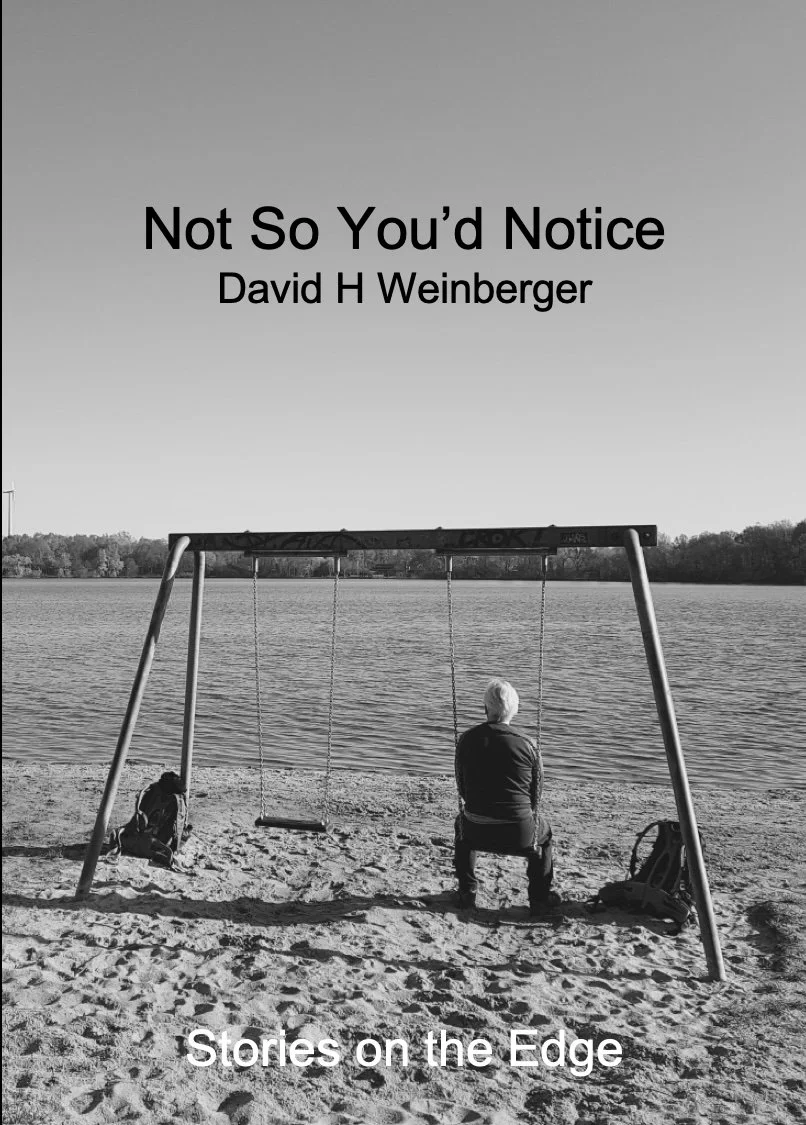
Kavanaugh states that he ‘will protest with words that are written in the memory of the senseless suffering I have known and seen’ and that is the spirit in which much of my writing is done. My collection Not So You’d Notice includes such protest stories as The Antipodal Point of Fear (gun violence), Bluebird (bullying), Thought it was Enough (homelessness), and Owning Scars (generational abuse). My newest collection which I am currently sending to agents includes protest stories primarily against the cruelty and dehumanizing behavior of the current administration. And finally, my novel-in-progress is a protest against the current push to eliminate empathy and kindness from our daily lives.

I found many worthwhile nuggets of thought in Kavanaugh’s argument which are pertinent to the research and writing I am doing. I can use both sides of his presentation as models for character development and for creating a sense of place in which my protagonist struggles. Beyond that, the work stands alone as a worthwhile read and a booster shot to support his suggestion that ‘I prize the uniqueness that is mine.’
In BOOKS, READING Tags nonfiction, Not So You'd Notice, book review, books
Comment

In a Human Voice, Carol Gilligan

June 22, 2026 David H Weinberger

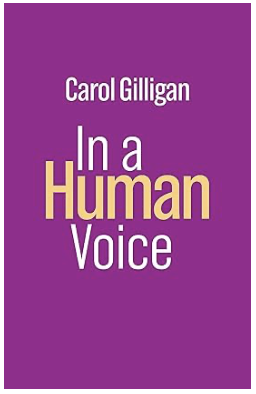
In a Human Voice, Carol Gilligan, 2023.

In a Human Voice is a follow-up to Gilligan’s 1982 book In a Different Voice: Psychological Theory and Women’s Development, after she challenged her own use of the word ‘different’ to explain the “feminine” voice she heard when considering moral development. Here, she redefines the different voice as a human voice, or an ethic of care. After reviewing her original studies for In a Different Voice, discussing how boys and girls are initiated into patriarchy, Gilligan goes on to suggest that “relational capacities such as empathy and emotional intelligence…are recognized for what they are: human strengths” in care ethics. This is an incredible read and a powerful antidote to the dominant view circulating about how strength is the ability to use force and take whatever you want from whoever you want. Gilligan’s writing is clear and well supported, incredibly descriptive concerning child development, and most importantly, hopeful in the quest for a more decent society.

How In a Human Voice informs my writing.

Voice is central to Gilligan’s text and of special interest to me is how voices are silenced. I have explored silence in much of my writing. I have an unpublished short story called Let There Be Silence where the protagonist spends years attempting to leave his/her abuser and desires above all to be free from the oppression of another’s harmful words. In another, Bluebird, a school bus driver bullied throughout her childhood escapes into silence to escape her memories and her own hated voice. Bluebird is available online at the journal Twelve Winters who first published it and in my short story collection Not So You’d Notice available at Amazon.

Resistance is another important element in this text, primarily in children’s potential resistance to the masculine and feminine roles dictated by a patriarchal society. Gilligan suggests that most human beings do not resist these roles, hence its ongoing repetition, but that it is possible and necessary in order to realize our human capacity for care. I address this resistance in The Arc of His Sword, available in the same story collection. In this story, a young girl’s father attempts to break the generational abusive childrearing he grew up with by building a more nurturing and understanding parent-child relationship with his daughter. I developed the character in order to explore the possibility of challenging traditional roles and Gilligan’s text would have been perfect to better understand this process.

I will use In a Human Voice a great deal as I further develop my characters in my ongoing novel project. The idea of a silenced voice and possible resistance are central to the novel. I envision my main character resisting with the help of others who have been resisting and the information I have gleamed from Gilligan’s book will be invaluable.

In BOOKS, READING Tags book review, nonfiction, Not So You'd Notice, short stories, patriarchy, resistance, care ethics
Comment

Reading List June 2026: Part 2

June 20, 2026 David H Weinberger

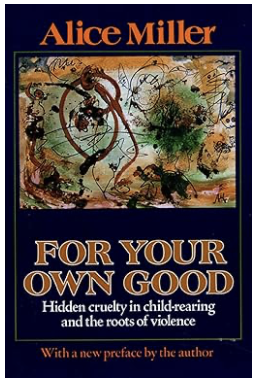
For Your Own Good: The Roots of Violence in Childrearing, Alice Miller, translated by Hildegarde & Hunter Hannum, 1983. Though published in the early eighties and based on German studies and data, Millers discussion and theories seem incredibly relevant to current violence and childrearing in the United States. She argues that the centuries old “poisonous pedagogies,” which is any ideology which proports the correct way to raise children, and which includes mental, verbal and physical abuse, should be confronted and abolished. Basically, she suggests that there is a great deal of cruelty in parent and child relationships with the child always being the one to suffer the greatest as they are so less powerful than the parent. She explains through the concept of “unconscious repetition compulsion” that parents simply repeat the parenting they received and because they most likely suffered a cruel childhood, they continue the legacy of cruelty. The first half on the book includes a presentation of her data and her theories and the second half includes three lengthy case studies which illustrate how violence, toward oneself or others, can be understood by looking at the perpetrator’s childhood.

One aspect of her argument I appreciate is her discussion of evil and what we generally refer to as “inhuman” behavior, or as popular in the US, a problem of “mental illness.” Miller suggests that we would be better to recognize “that human being and beast do not exclude each other.” This is striking to me because we often write things off we cannot understand, vicious violence or cruelty, as evil and therefore out of our control. Only by accepting that humans are capable of incredible cruelty are we prepared to do something constructive about the problem.

How For Your Own Good: The Roots of Violence in Childrearing informs my writing.

I chose this work of nonfiction in conjunction with the research I am conducting for the novel I am writing. Specifically, I was considering the hatred and anger, and the concomitant cruelty, that individuals in the current administration and many of their supporters exhibit on a daily basis. I wondered what experiences they may have suffered to leave them with such anger. I ran across this book and thought it might help me answer this question. Miller addresses the issue directly and the information is helpful in creating my character studies, not just for my cruel characters but also for the characters of a more gentle nature.

Upon concluding this book I took a look back on some of my published short stories and realized I had previously dealt with the same issues, though perhaps not as directly as I could have. Specifically in my story Owning Scars, first published by The Write Launch and available at their website, but also in my collection, Not So You’d Notice available at Amazon. Unknowingly, I used the concept of repetition compulsion to present a man coming to understand and regret his cruel behavior towards his siblings, a behavior he learned from his parents and his peers. Likewise, my story Idle Hillpresents a misunderstood young man whose father utilized poisonous pedagogies (without my knowing it at the time) and finds the only solution to his unhappiness is through self-destruction. Idle Hill was first published by Synkroniciti and is available in the same story collection.

Overall, For Your Own Good stands as a great information source for creating backstory for fictional characters to help them be more believable and to explain their seemingly cruel behaviors. Beyond fiction though, it stands as a wonderful resource as I explore and tell my own story, attempt to understand why I do some of the things that I do, and come to terms with the cruelty I endured in childhood.

In BOOKS, READING, WRITING Tags book review, nonfiction, Not So You'd Notice, cruelty, parenting
Comment

Reading List June 2026: Part 1

June 14, 2026 David H Weinberger

The Wind Whistling in the Cranes, Lidia Jorge, translated by Margaret Jull Costa and Annie McDermott. This is a Portuguese novel that takes place in Valmares, a fictional town along the Algarve coastline. It portrays two rival families: the owners of the town’s previous canning factory (the Leandro family) and working class immigrants from Cape Verde (the Matas family) who now reside in the abandoned factory. The main character Milene is a Leandro and her suitor, Antonino, is a Matas. It is a slow moving novel but still quite good. I became impatient with Milene’s slow decision making but the behavior fit her character well and as the novel developed I enjoyed her introspective tendencies and freewheeling spirit. While a lot of the story centers around the developing romance between these two characters, Jorge also explores postcolonial memory and consequences, racial antagonism, economic divisions, and the nature of evil. The novel also includes a strong sense of place, from the placement of the factory near the coast, to Milene’s inherited isolated home, from the Matas matriarch longing for Cape Verde to the Leandro’s desire to develop the property. Overall, an enjoyable read.

How The Wind Whistling in the Cranes informs my writing.

The novel’s sense of place is outstanding, something I often neglect in my stories. While setting is important in my writing, such as in my short stories Bluebird (a school bus) and Sorting Through Clams (a clamming boat), they could have been stronger had I been clearer about the importance of those places in the development of my characters. Jorge does that really well.

Jorge explores the nature of evil (something I am studying now) in her novel and I appreciate how she wove it into daily conversations and internal thoughts, rather than a blatant exposition about evil. It is masterfully done and nicely parceled out throughout the novel. It is what I am attempting with the novel I am currently writing and I will revisit Jorge’s success in implementing this skill.

Check out my stories in my collection Not So You’d Notice available at Amazon. Let me know how sense of place is used in Bluebird and Sorting Through Clams.

In BOOKS, FICTION, READING, WRITING Tags READING, writing, book review, short stories, novel, Not So You'd Notice
Comment

Debut publication: Not So You'd Notice

August 10, 2025 David H Weinberger

Book Cover: Not So You’d Notice

My debut story collection is now available on Amazon in paperback and Kindle. It’s been years in the making and it is exciting to see it hit the shelves. Many of the stories have been previously published in outstanding literary journals and are now available in this collection. Several of the stories are new and I would love to hear what you think of them. Here is the book description as listed on Amazon and on the back flap:

Not So You’d Notice book blurb.

I would be honoured for you to read my collection available at Amazon .com and Amazon.de. Feel free to leave a review on Amazon. Happy reading!

In FICTION, READING, BOOKS Tags short stories, story collections, literature, debut fiction, Not So You'd Notice
Comment
Summary Block
This block is invalid. Please check the block settings and try again.
Featured
Aenean eu leo Quam

Powered by Squarespace