• About
  • Publications
  • Blog
  • Writing
  • Reading
  • Travel
Menu

David H Weinberger

Street Address
Exploring writing, reading, and traveling.
Phone Number
Engaging through stories.

Your Custom Text Here

David H Weinberger

  • About
  • Publications
  • Blog
  • Writing
  • Reading
  • Travel

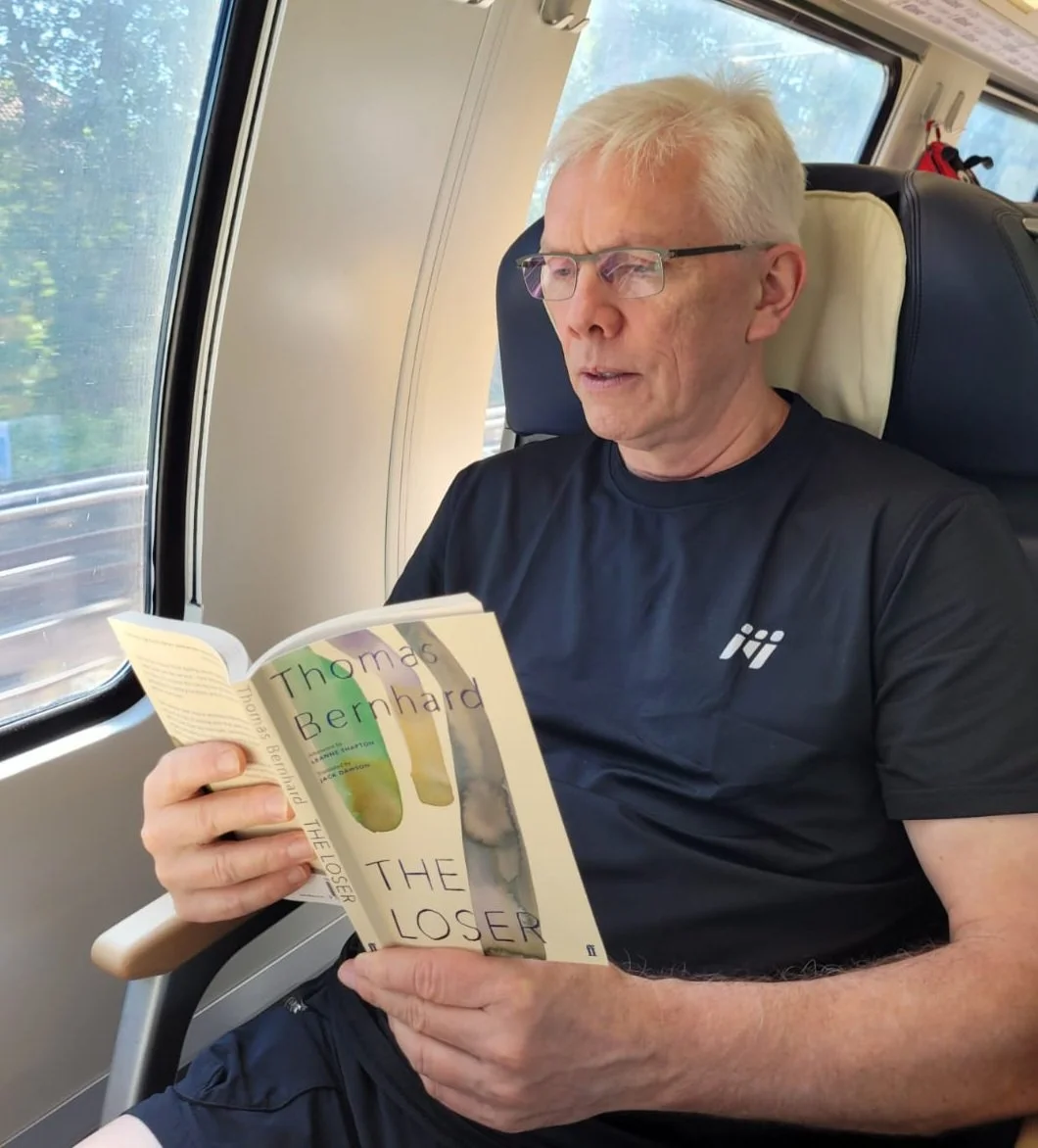
The Loser, Thomas Bernhard

July 27, 2026 David H Weinberger

Reading The Loser

Ahh! To read Bernhard again! Thoroughly enjoyed this single paragraph interior monologue. I’ve read most of Bernhard’s work in the past and wanted to reread his oeuvre once again so I started with The Loser. The story involves three main characters: Glenn Gould, Wertheimer, and the narrator. They become friends at the Mozarteum in Vienna while attending a Horowitz class for aspiring concert pianists. The plot that exists revolves around the life of Wertheimer, considered ‘the loser’ of the group. But both Wertheimer and the narrator have ‘loser’ characteristics, evident as the story unfolds. Both are devastated in the goal of musical virtuosity by the already brilliant Gould. Once they hear Gould play they abandon their quest for musical virtuosity, feeling that if one cannot be the best one should not even try.

The novel displays Bernhard’s typical misanthropic and extremely bleak prose which might be off-putting to many but I find rewarding. I’ve changed my world views since I first read Bernhard when I completely absorbed his views and conclusions. This time around I find I agree with his evaluations but not so much with his conclusions. Still, The Loser is a challenging and enjoyable read.

How The Loser informs my writing.

I have tried using this monologue style before, specifically in my short story Owning Scars, included in my collection Not So You’d Notice (available at Amazon). In it I imagine a man reminiscing on his past cruelty towards his siblings and the story take place primarily in his head. Not sure if I pulled it off but it is one of my favorite stories in the collection. I am also experimenting with the style in my work-in-progress so it is good to get a refresher course from Bernhard.

Most of my stories are fairly bleak seeing as Bernhard has long been an inspiration for my writing but as mentioned, I have a different mindset these days. I still deal with topics which can fall on the bleak side but I am trying to find a more positive spin for my narrative, much along the lines of ‘yes, this is how bad things are but here is how we can change that.’ We’ll see how successful I am with this as I conclude my manuscript.

In FICTION, READING, BOOKS Tags novels, book review, books in translation, fiction
Comment

George Saunders & Joy Williams

July 19, 2026 David H Weinberger

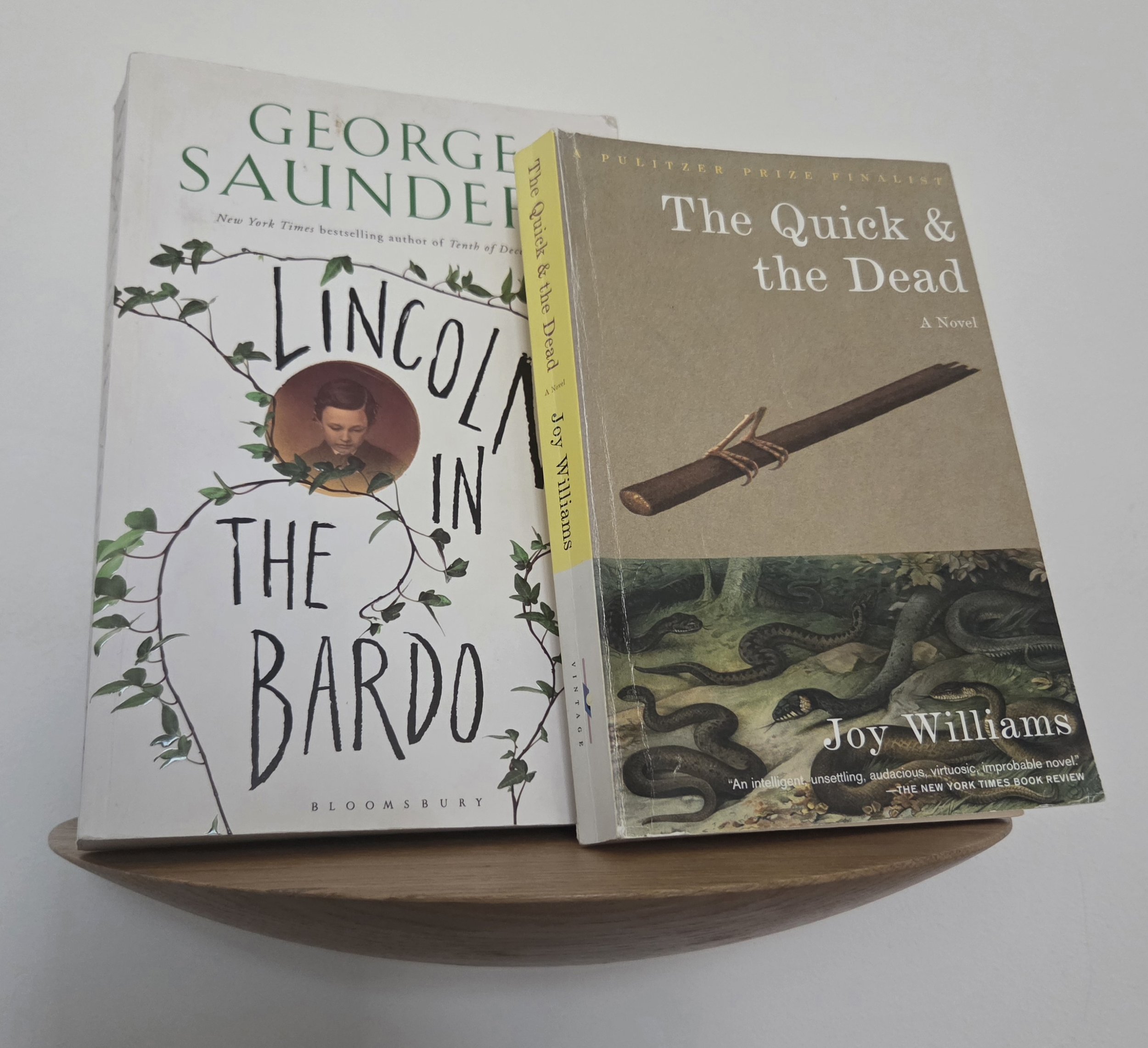
Lincoln in the Bardo, George Saunders, 2017.

This is a challenging but very fun novel. Entirely told in quotes, the story begins with the death of Lincoln’s son and goes on to explore grief, suffering, and loss on both sides of death: what happens to the living after death and where the dead go. In the novel the dead are in the bardo and provide the bulk of the story. They wrestle with their own losses (the living) and the challenge of moving on. In the cemetery where the story unfolds, Abraham Lincoln suffers extreme grief and there are plenty of eyewitness accounts of his behavior and his expressions of loss. A very intriguing subplot is the juxtaposition of Lincoln’s grief over the loss of his son and the loss of multitudes of soldiers during the Civil War. I found it to be one of the more interesting conversations in the story. But I also enjoyed many of the other conversations and debates in the novel. Lincoln in the Bardo was a great read, especially its mix of fiction and history (sometimes difficult to see their separation) and really cool experimental style.

The Quick & the Dead, Joy Williams, 2000.

Like Lincoln in the Bardo, this Williams novel is saturated with the dead, including a ghost, dead loved ones, the living dead of a nursing home, and a lot of dead animals. It is the background for the story of several adolescent girls making their way through the world seemingly alone: they experiment with environmentalism, silence, and privilege. Most of the adult characters are examples of ways not to live a life, souls filled with regrets, dissatisfaction, and bitterness. It is a beautiful story and incredibly well told by Williams. I’m looking forward to reading her most recent short story collection, The Pelican Child.

In BOOKS, FICTION, READING Tags novel, fiction, book review, books, grief
Comment

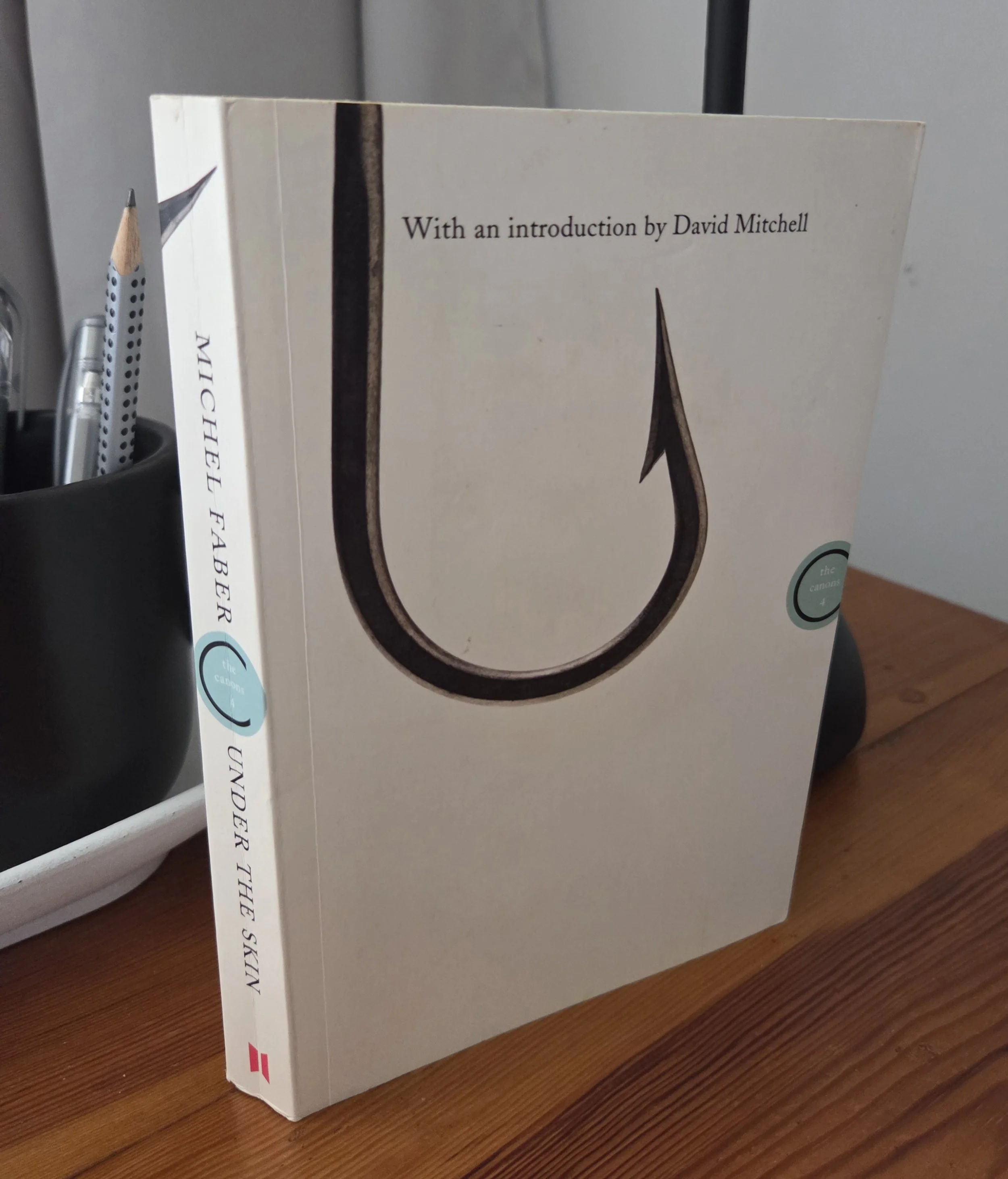
Under the Skin, Michel Faber

July 16, 2026 David H Weinberger

Under the Skin, Michel Faber, 2000. What an awesome novel! I first became aware of Michel Faber through his wonderful nonfiction book, Listen: On Music, Sound and Us and then went on to read his short story collection Some Rain Must Fall. His themes and ideas are intriguing and his writing is impressive. It’s the same with Under the Skin. Isserley drives Scotland roads picking up hitchhikers and as she uses them for her own purposes we learn who she is and about the organization she serves. It’s a nice mix of science fiction, literary fiction, gender study, and psychological study. Faber presents a microcosm of the problems we face with tribalism, nationalism, and xenophobia without ever mentioning those terms. He also expertly presents the evolution of Isserley in terms of her view of the natural world and her awareness of it. Glad I read this novel and I am looking forward to reading more of his work.

How Under the Skin informs my writing.

Faber’s pacing is wonderful with clues being presented from the early pages without revealing too much. I have been attempting the same with my novel-in-progress in terms of how much I reveal of the situation. I tend to blurt things out and then discuss them rather than letting the action and dialogue slowly reveal my message. I would love to create a manuscript that is as engaging and suspenseful as Faber’s.

Under the Skin also delivers a beautiful message: whether one agrees with it or not is irrelevant. The art of storytelling used to present this message is inspiring. I too have an overall message I would like to present through my current novel and can use Faber’s novel as a model to strive for. If my manuscript turns out to be a quarter as successful as Faber’s I would be satisfied. Thanks Michel Faber!

In READING, FICTION, BOOKS Tags literature, fiction, book review, Michel Faber
Comment

Ada Limón & Lászlo Krasznahorkai

July 8, 2026 David H Weinberger
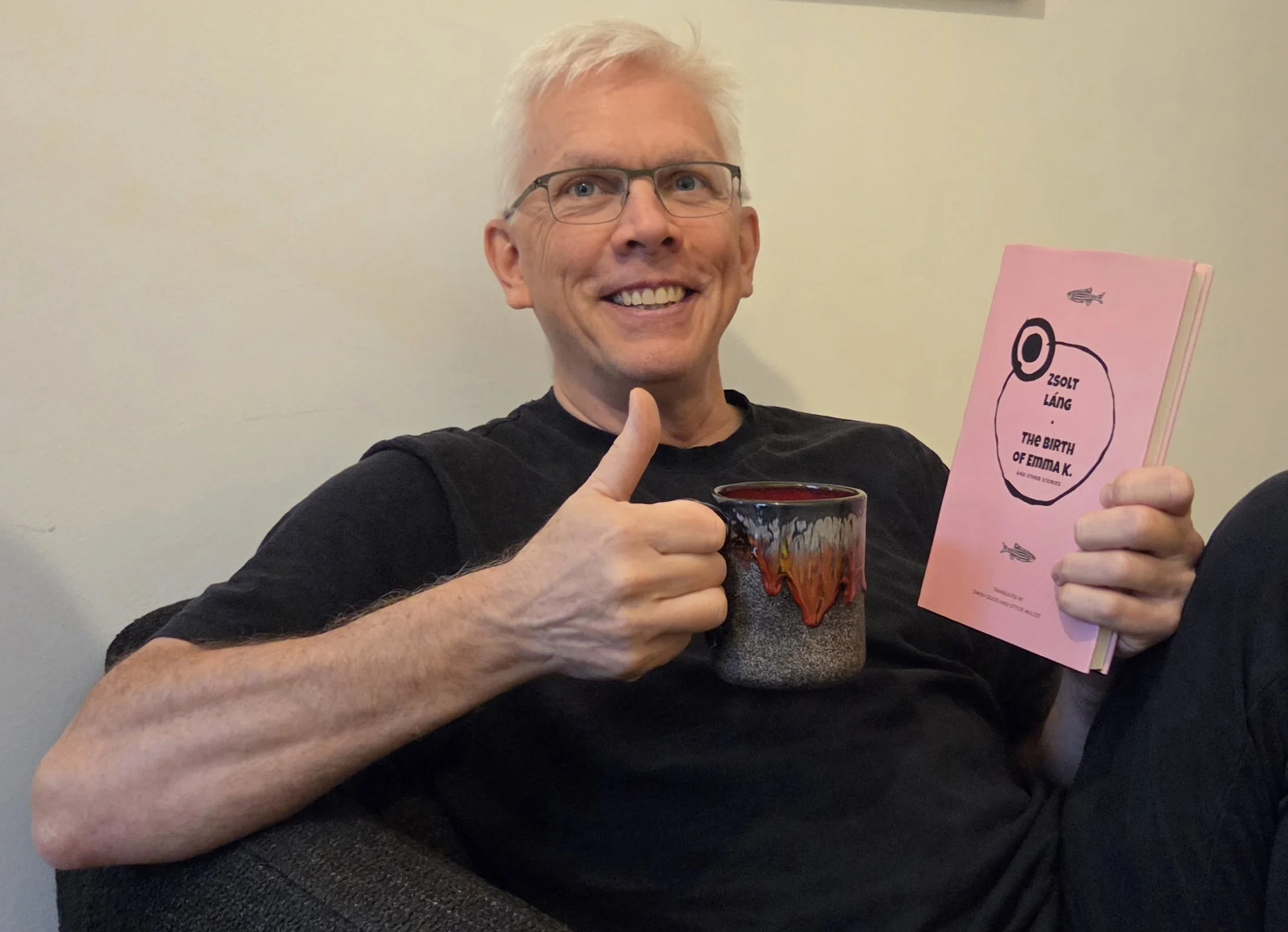
JulyReads_Limon.png JuneReads_Krasznahorkai.png

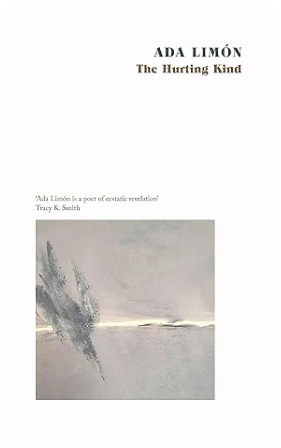
The Hurting Kind, Ada Limon, 2022. I don’t read much poetry so I find it difficult to respond to this collection but I’m glad I was introduced to it. I learned about Limon, a former US poet laureate, through Tricycle’s Daily Dharma. In these poems, Limon eloquently discusses the interconnections between people and with nature. She focuses on moments of what might be called ultimate presence which she mostly finds in nature, such as a kingfisher simply existing in its environment, or a half burned tree living what is left of its life despite its dead half. I read these poems as suggestions of how we could live our lives, being more in tune with our surroundings and accepting the simplicity of embracing our inner lives. Or as Limón says in the poem In the Shadow, ‘Why can’t I just love the flower for being a flower?’

A Mountain to the North, A Lake to the South, Paths to the West, A River to the East, László Krasznahorkai, 2003. Translated from Hungarian by Ottilie Mulzet, 2022. A very enjoyable novella from Krasznahorkai with typical cryptic meanings and beautiful meandering thought passages. The core of the novel is about the grandson of Prince Genji who searches for the perfect garden hidden in a monastery. There are wonderful descriptions of exquisite building procedures, architecture, and nature but also a great deal of more disturbing images like dead goldfish, a dying dog, and a Buddha with a turned head so he would not have to see ‘this wretched world.’ A book worth spending time with teasing out the imagery and meditations on less than perfect human behavior.

In BOOKS, READING Tags fiction, poetry, book review, Limon, Krasznahorkai, books in translation, READING
Comment

Austral, Carlos Fonseca

July 3, 2026 David H Weinberger

Austral, Carlos Fonseca, 2023. Translated from the Spanish (Costa Rica) by Megan McDowell.

Another fantastic novel by Fonseca: I found his Natural History to be excellent and I have ordered his first novel, Colonel Lágrimas. Very pleased to be spending time with his prose.

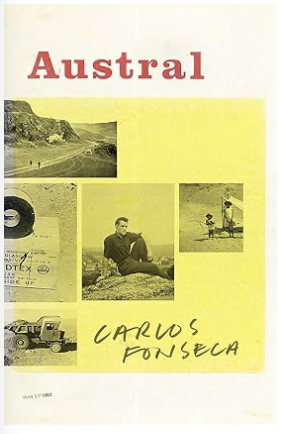
Austral, structurally similar to Natural History, includes a fascination with books, multiple texts within texts, an interest in land art, and a central focus on memory. It involves an academic’s quest to complete the final, unfinished novel of a recently deceased friend. He travels from the United States to Argentina and Guatemala to uncover the meaning of her text and along the way the reader is treated to intriguing characters and intense ruminations on the nature of memory, feeling the pain of others, and the development of culture.

Though I’ve finished the novel, I feel there are many more threads I need to untangle. Sometimes challenging, often requiring further research, but always engaging and thought provoking, Austral is a must read.

How Austral informs my writing.

I love this style of storytelling which uses embedded texts so successfully. Fonseca is so good at it and so is Lucy Ives, who I may read more of in the future. I am using it in my current writing and gave it a try in my short story Hypocrites Among Us, which has not yet found a publisher. In my story, I use song titles and lyrics, a university syllabus, and various fictional essays to tell the story of a young man learning about his father and the prevalence and common acceptance of hypocrisy in politics. I don’t know if I pulled it off well enough to earn an acceptance letter but it was fun utilizing this technique and I will continue to practice it.

I also found Fonseca’s prose about books and how children often respond to the world by seeking refuge within them beautifully written. I have a tendency in my writing to bluntly state a fact while Fonseca delicately plants suggestions and comments that unveil his thoughts about these issues. My new novel incorporates this very basic but difficult practice but I can always improve upon it by emulating the writing in Austral.

Thanks to Carlos Fonseca for writing such wonderful texts, and Megan McDowell for translating him!

In BOOKS, FICTION, READING Tags fiction, novels, book review, books in translation, Carlos Fonseca
Comment

Almost No Memory, Lydia Davis

June 25, 2026 David H Weinberger

Almost No Memory, Lydia Davis, 1997. Included in The Collected Stories of Lydia Davis, 2011.

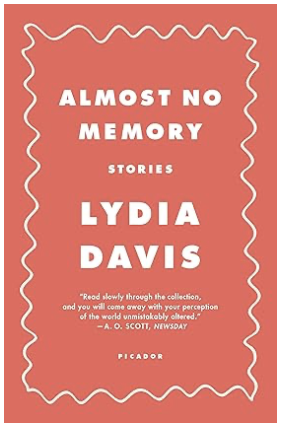
Davis’ short stories have been labeled as miniatures, prose poems, and contemplations, among other descriptors as a way to understand what she is doing in her work. I do find myself questioning what each small offering is supposed to be but ultimately it really doesn’t matter. Davis explores the inner workings of the mind as it works to make sense of relationships and reality and her form is an excellent way to do so. While sometimes confused as to the message of a particular story I was intrigued with each piece. The Thirteenth Woman, where the first twelve women completely ignore the thirteenth, is simply delightful. In Foucault and Pencil, a woman strives to understand the meaning and cause of an argument with her partner. And my favorite, The Race of the Patient Motorcyclists, reads like a paean to slowness.

There is a scene I love in a Samuel Beckett story about a character holding three pebbles as he goes through the iterations in his mind of how he can put them in two pockets one at a time: an incredible scene. Many of the stories in Almost No Memory are like this: characters thinking through the possibilities of doing a particular task but being unable to reach a conclusion. Other stories are essentially lists but read like dynamic and meaning-filled short stories.

How Almost No Memory informs my writing.

As I read these stories, I did have some confusion of what the meaning was, especially in light of the title of the collection. Ultimately, my take away is that Davis is suggesting that in our present conflicts or disagreements we have no memory of how we got into that situation or into that particular relationship with the partner we are having a conflict with: we are totally consumed with thinking through the current problem. I realize this is a simplistic interpretation but with it I was better able to process each story. And I am not suggesting that I know what Davis meant with the individual stories or with the collection as a whole. But what I appreciate is that her art is not really about a particular meaning or take away. The stories stand on their own but they also work well as a unified whole. This is what I would like to accomplish with my newest short story collection I have been putting together. My stories are about the current US political situation and the effect many of their dictates have on everyday people. I am hopeful that the stories add up to a powerful message but one that I am not blatantly proclaiming. I would like it to be as subtle as Davis’.

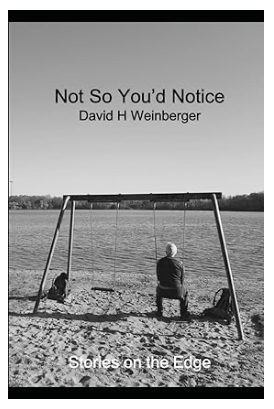
My story Fragility comes closest to the method Davis uses, though I am in no way comparing my work to hers: hers is a genius I will most likely never attain. In my story a mother is tormented by her son’s behavior of talking to his dead grandfather and is put off by the ‘help’ his school offers. It is a mere 1700 words and I have been told that people love it or hate it; there doesn’t seem to be any in-between. But I mention it because I feel it is short on explanations and simply presents a situation that I hope the reader will analyze independently. Fragility was first published by the now defunct Slag Review but can be found in my collection Not So You’d Notice, available at Amazon.

My story collection!

In BOOKS, FICTION, READING Tags short stories, book review, Lydia Davis, Almost No Memory, fiction
Comment

Reading List May 2026

June 10, 2026 David H Weinberger
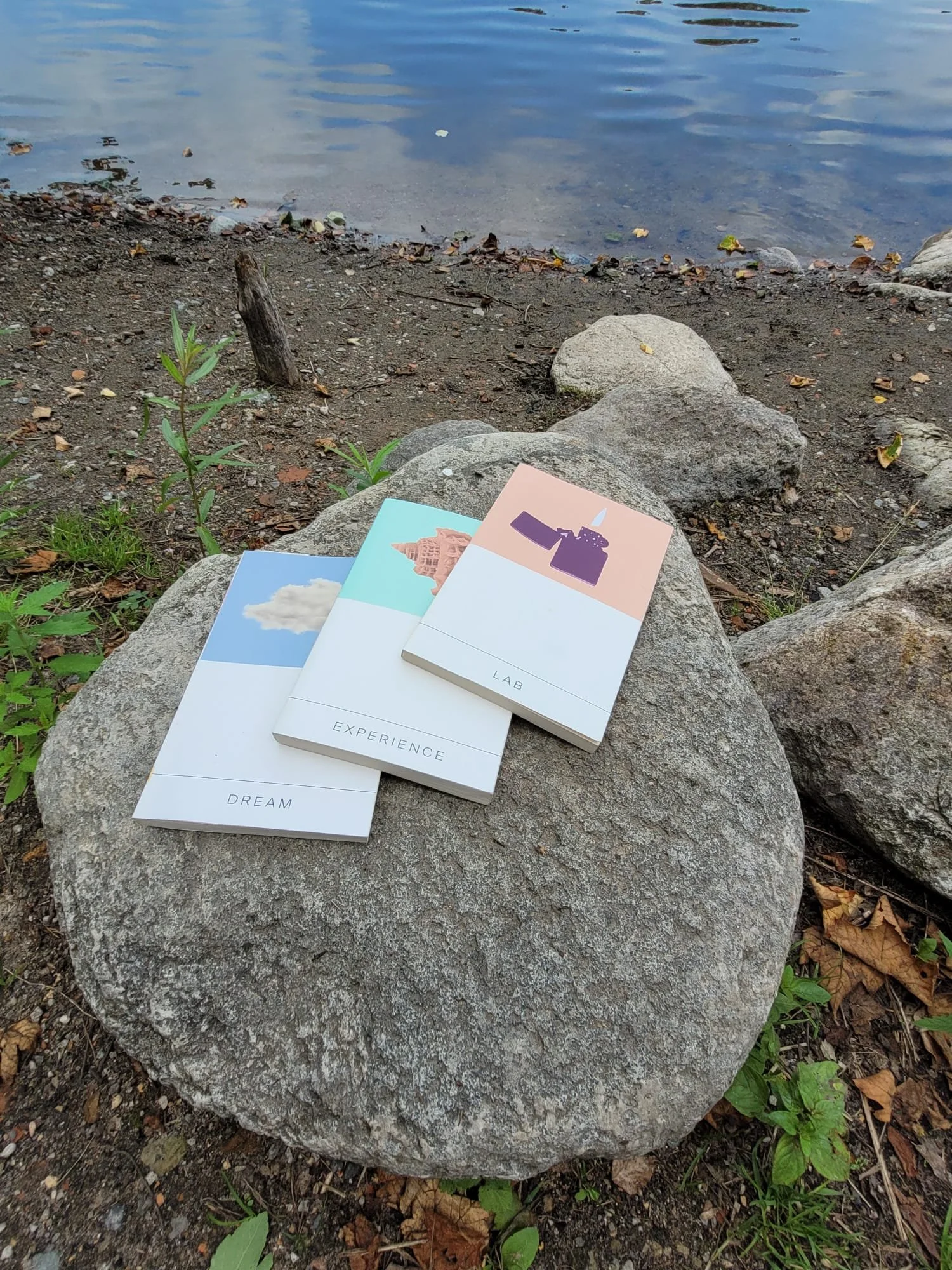
MayReads_Croft.png MayReads_Davis.png MayReads_Enriquez.png MayReads_Everett.png MayReads_Ishizawa.png MayReads_Tokarczuk.png MayReads_Whitehead.png

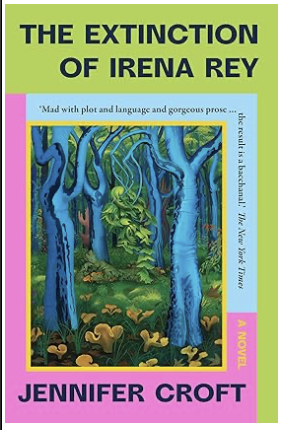
·      The Extinction of Irene Rey, Jennifer Croft. Fun novel centered on a cult-like group of translators representing different languages gathered together to translate their beloved author’s newest manuscript. Explores various extinction events from the smallest animals to large societies, including the extinction of particular human behaviors and preferences. As the translators struggle to understand their separate relationships with their author a mystery unfolds and drives the plot of the novel. Really nice exploration of identity and group personalities and our tendency to overlook flaws in people we admire.

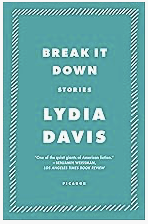
·      Break It Down: Stories, Lydia Davis. The copy I read is part of Davis’ giant The Collected Stories of Lydia Davis: I plan on reading each collection separately between some other works. These are quite short stories, there are 34 here, exploring the inner workings of their characters. I especially like the theme of ‘breaking it down’ where the characters analyze a situation to find meaning. Great narrative style and overall enjoyable reading.

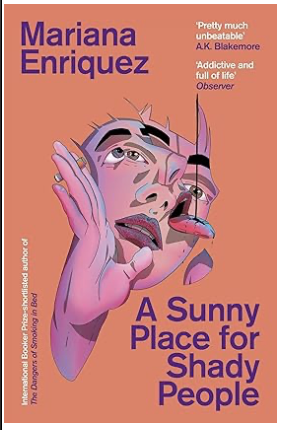
·      A Sunny Place for Shady People, Mariana Enriquez, translated by Megan McDowell. The latest short story collection from Enriquez (Argentina) with her usual focus on horror. These stories are well-written and address interesting themes, such as responses to trauma and our relationship to the dead, and are populated with ghosts and hauntings. I appreciate the art of her storytelling but in the end the style does not appeal to me.

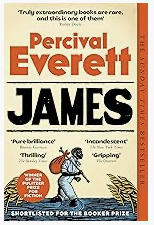
·      James, Percival Everett. A great retelling of James’ story, from Huckleberry Finn, from his point of view. Completely engrossing tale as James discovers his own identity after being oppressed as a slave and a black man. Essential reading when considering race relations in the United States and elsewhere.

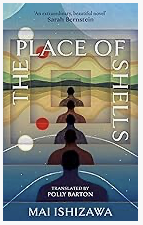
·      The Place of Shells, Mai Ishizawa, translated by Polly Barton. A novel investigating memory and the role of the past in our daily lives. I especially enjoyed Ishizawa’s discussion of masks and layers of multiple masks we wear, as well as the idea that memories and places wear masks too. The novel unfolds as a sort of stripping off of each character’s masks.

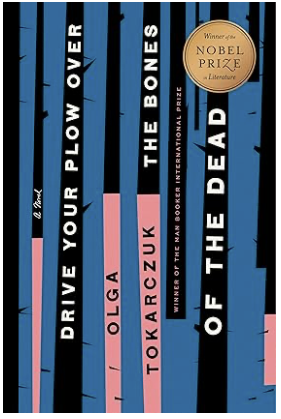
·      Drive Your Plow Over the Bones of the Dead, Olga Tokarczuk, translated by Antonia Lloyd-Jones. It was certainly worth my time and energy to read this novel a second time. Dead bodies, human and animal, frequently appear and the protagonist Janina, a beautifully developed character, gets involved in solving who is doing the murdering. A wonderful exploration of our relationship to the natural world, the origin of gentleness and cruelty, and the role of anger in addressing the wrongs of the world. Incredible read from an outstanding Polish author.

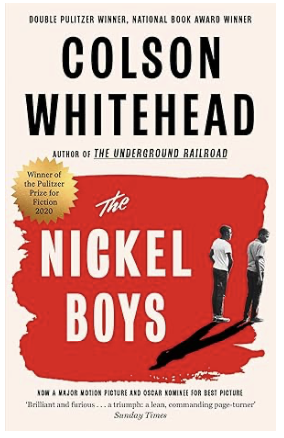
·      The Nickel Boys, Colson Whitehead. This is a completely enjoyable and intriguing novel. Centered in the black boy’s section of a reform home Whitehead explores brutality, hatred, and the exerted effort by many to thwart the progress of well-meaning individuals. One of my favorite lines, applicable to the perpetrators in the novel as well as those in our current administration is: ‘There was no higher system guiding Nickel’s brutality, merely an indiscriminate spite, one that had nothing to do with people.’ The ending of the novel was superb and brilliantly written.
In BOOKS, READING Tags fiction, short stories, literature, book review
Comment

Reading List January 2026

February 11, 2026 David H Weinberger
JanReads_Bowles.png JanReads_Cole.png JanReads_Patrick.png JanReads_Soseki.png JanReads_Szalay.png

I’m not sure why I only read five books in January but there it is. Like December, I put off writing brief reviews a bit too long so here I provide simply a list of my January books.

·      Plain Pleasures, Jane Bowles.

·      Tremor, Teju Cole.

·      Mrs. S, K. Patrick, 4th Estate, 2023.

·      Kokoro, Natsume Soseki, translated by Edwin McClellan.

·      All That Man Is, David Szalay.

In READING, FICTION, BOOKS Tags READING, books, fiction, books in translation
Comment

Reading List December 2025

February 11, 2026 David H Weinberger
DecReads_Antunes.png DecReads_Bolano.png DecReads_Kiergegaard.png DecReads_King.png DecReads_Mills.png DecReads_Msohfegh.png DecReads_Vonnegut.png

No reviews here because I put it off too long. Just a list of the books I read in December 2025.

·      Midnight is Not in Everyone’s Reach, António Lobo Antunes, translated by Elizabeth Lowe.

·      The Insufferable Gaucho, Roberto Bolaño, translated by Chris Andrews and Natasha Wimmer.

·      Repetition, Soren Kiergegaard.

·      The Good Neighbor: The Life and Work of Fred Rogers, Maxwell King

·      The Forensic Records Society, Magnus Mills.

·      Lapvona, Ottessa Moshfegh.

·      Slaughterhouse Five, Kurt Vonnegut.

In FICTION, READING, BOOKS Tags fiction, philosophy, READING
Comment

Reading List October 2025

November 12, 2025 David H Weinberger
OctReads_Bazterrica.png OctReads_Blackwell.png OctReads_Bolano.png OctReads_Bradbury.png OctReads_Latronico.png OctReads_Williams.png OctReads_Zamora.png

·      The Unworthy, Agustina Bazterrica, translated by Sarah Moses. Another incredible novel from the author of Tender is the Flesh, one of my favorite reads of 2020. This time the story takes place in a dystopian convent ruled over by a cruel male leader and an equally cruel Superior Sister. It is a brutal hierarchical world of women with plenty of abuse at all levels. Great story exploring misogyny, faith, and masochism. Scary how it mirrors our current world.

·      Babel, Gabriel Blackwell. A short story collection attempting to unravel the confusion we experience when we confront ourselves and those around us. Some interesting characters and situations but lacking as a whole.

·      The Return, Roberto Bolaño, translated by Chris Andrews and Natasha Wimmer. Another incredible short story collection from Bolaño. This time along with his regular themes there is a greater focus on death. Wonderful stories!

·      Fahrenheit 451, Ray Bradbury. A classic novel and a pleasure to reread as part of my research on book banning for a series of short stories I am working on. Should be required reading for the folks working so tirelessly banning books these days.

·      Perfection, Vincenzo Latronico, translated by Sophie Hughes. Story of an expat couple living their 20’s through 40’s as web designers. They make sense of their lives and attempt to find meaning by procuring the ‘right’ consumer goods only to discover how empty their lives are after an adulthood spent emulating the digital world.

·      The Man Who Cried I Am, John A. Williams. A 1967 novel about a black writer navigating the world of politics and journalism. Wonderful study of mortality and interracial relations, including a vicious government plot to deal with racial problems.  

·      Solito, Javier Zamora. Harrowing memoir about a nine-year-old boy migrating to the USA from El Salvador, including the impressive story about the humanity showed by those who helped him on his way. The author does not include discussion about the pros and cons of migration but rather uses the platform to share the plight of those in the process. Certainly a valuable story to include in those discussions.

In READING, FICTION, BOOKS Tags reading list, fiction, nonfiction, memoir, READING
Comment
Older Posts →
Summary Block
This block is invalid. Please check the block settings and try again.
Featured
Aenean eu leo Quam

Powered by Squarespace