• About
  • Publications
  • Blog
  • Writing
  • Reading
  • Travel
Menu

David H Weinberger

Street Address
Exploring writing, reading, and traveling.
Phone Number
Engaging through stories.

Your Custom Text Here

David H Weinberger

  • About
  • Publications
  • Blog
  • Writing
  • Reading
  • Travel

Reading List November 2025

December 2, 2025 David H Weinberger
NovReads_Ardern.png NovReads_Choo.png NovReads_Dufourmantelle.png NovReads_Mackenzie.png NovReads_Markson.png NovReads_Nye.png NovReads_Schweblin.png NovReads_Szalay.png

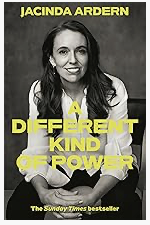
·      A Different Kind of Power, Jacinda Ardern. One of several books I am reading to make sense of the lack of gentleness in our world and my desire to see it practiced more widely. Ardern’s memoir discusses what she would later term empathetic leadership during her years as New Zealand’s prime minister. Beautiful story about the power of kindness over brutal and caustic social and political behavior.

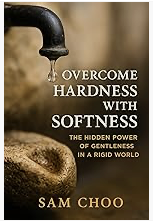
·      Overcome Hardness with Softness, Sam Choo. Nonfiction addressing gentleness, flexibility, and calm thought as a kind of strength. More of an overview of this approach than an in-depth analysis but nicely written with encouraging thoughts about the viability of gentleness.

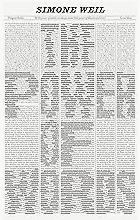
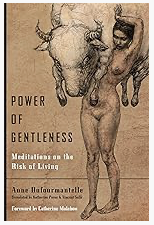
·      Power of Gentleness: Meditations on the Risk of Living, Anne Dufourmantelle, translated by Katherine Payne & Vincent Sallé. Dufourmantelle was a philosopher and psychoanalyst and provided an incredible account of gentleness in this brief text. She cogently discusses the power of gentleness and what a risk it is to live a gentle life: a risk she argues is worth taking. I will return to this amazing work sometime soon.

·      The Man of Feeling, Henry Mackenzie. I chose this book to understand how the author characterized gentleness. Written in the 18th century the story presents the protagonist’s gentleness as a virtue as opposed to the common view of gentleness as a weakness. Overall a decent story of one man’s life spent fiercely clinging to his empathetic approach towards others.

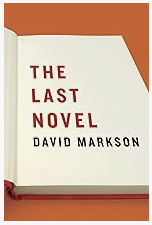
·      The Last Novel, David Markson. The conclusion to the trilogy includes more author notes and reminisces about artists and the creative process. A greater focus on death this time as the Novelist approaches his own. An enjoyable and challenging trilogy.

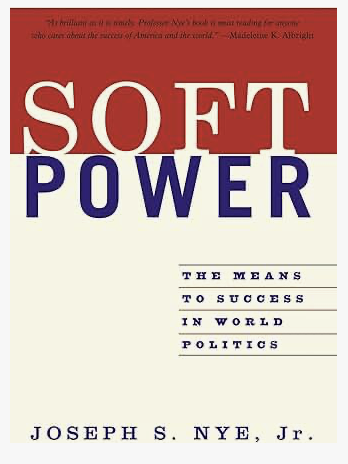
·      Soft Power, Joseph S Nye. Non-fiction explaining the role soft power plays in successful world politics, with emphasis on the United States. Written in 2004 so the data is outdated and much has changed in the world since then. Still, a useful text in my exploration of gentleness.

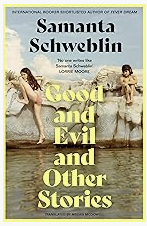
·      Good and Evil and Other Stories, Samanta Schweblin, translated by Megan McDowell. I could read Schweblin stories all day long. This collection explores the things we lose during our lifetimes, from our voices, to loved ones, to valuable relationships. In the end, the characters are left to themselves to understand their losses. Quite supreme!

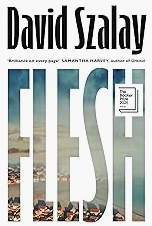
·      Flesh, David Szalay. Novel which just won the Booker Prize, I read it to see how Szalay presented the male voice, something many critics discussed. Another story of a man’s life, this time growing up in Hungary, emigrating to London, and finally returning to Hungary. The protagonist has very little to say so we learn about him from the situations he falls into, his successes and his failures. One of the main characters says about the protagonist Istvan he “represents a primitive form of masculinity” which I found to be an apt description of the character throughout the text.

In READING, BOOKS Tags novels, short stories, memoir, nonfiction, READING, literature
Comment

Reading List October 2025

November 12, 2025 David H Weinberger
OctReads_Bazterrica.png OctReads_Blackwell.png OctReads_Bolano.png OctReads_Bradbury.png OctReads_Latronico.png OctReads_Williams.png OctReads_Zamora.png

·      The Unworthy, Agustina Bazterrica, translated by Sarah Moses. Another incredible novel from the author of Tender is the Flesh, one of my favorite reads of 2020. This time the story takes place in a dystopian convent ruled over by a cruel male leader and an equally cruel Superior Sister. It is a brutal hierarchical world of women with plenty of abuse at all levels. Great story exploring misogyny, faith, and masochism. Scary how it mirrors our current world.

·      Babel, Gabriel Blackwell. A short story collection attempting to unravel the confusion we experience when we confront ourselves and those around us. Some interesting characters and situations but lacking as a whole.

·      The Return, Roberto Bolaño, translated by Chris Andrews and Natasha Wimmer. Another incredible short story collection from Bolaño. This time along with his regular themes there is a greater focus on death. Wonderful stories!

·      Fahrenheit 451, Ray Bradbury. A classic novel and a pleasure to reread as part of my research on book banning for a series of short stories I am working on. Should be required reading for the folks working so tirelessly banning books these days.

·      Perfection, Vincenzo Latronico, translated by Sophie Hughes. Story of an expat couple living their 20’s through 40’s as web designers. They make sense of their lives and attempt to find meaning by procuring the ‘right’ consumer goods only to discover how empty their lives are after an adulthood spent emulating the digital world.

·      The Man Who Cried I Am, John A. Williams. A 1967 novel about a black writer navigating the world of politics and journalism. Wonderful study of mortality and interracial relations, including a vicious government plot to deal with racial problems.  

·      Solito, Javier Zamora. Harrowing memoir about a nine-year-old boy migrating to the USA from El Salvador, including the impressive story about the humanity showed by those who helped him on his way. The author does not include discussion about the pros and cons of migration but rather uses the platform to share the plight of those in the process. Certainly a valuable story to include in those discussions.

In READING, FICTION, BOOKS Tags reading list, fiction, nonfiction, memoir, READING
Comment

Reading List September 2025

October 23, 2025 David H Weinberger
SeptReads_Bolano.png SeptReads_Cardenas.png SeptReads_Hedges.png SeptReads_Markson.png SeptReads_RiveraGarza.png SeptReads_Slesinger.png

·      Last Evenings on Earth, Roberto Bolaño, translated by Chris Andrews & Natasha Wimmer. The first of four Bolaño short story collections I plan on rereading. Struggling and failed writers populate these incredible stories. These are downtrodden exiled characters and there is a continual threat of violence which propels the narratives.

·      American Abductions, Mauro Javier Cárdenas. This novel from Ecuador is set in America in the near future but closely resembles the present despite its technological advancements. The novel explores the psychological and physical stress caused by the deportations of Latin Americans living and working in the USA. Frightening but intriguing experimental writing.

·      America: The Farewell Tour, Chris Hedges. Hedges nonfiction book examines what he sees as America’s decline with chapters addressing hate, work, freedom, addiction and more. Sober reading providing an interesting analysis of the main culprit, the corporate state.

·      Vanishing Point, David Markson. A continuation of Markson’s This is Not a Novel with a deeper focus on impending death. Presented as notes Author has collected on index cards mainly about the challenges of creative life. Looking forward to the final novel.

·      Death Takes Me, Christina Rivera Garza, translated by Sarah Booker & Robin Meyers. A literary crime narrative out of Mexico involving gendered violence and deeply steeped in an exploration of poetry. Incredible experimental writing.

·      Time: The Present, Tess Slesinger. Selected stories from Slesinger writing from the 1930’s. There are a handful of extremely excellent stories in this collection but overall I was impressed with Slesinger’s exploration of gender relations, worker exploitation, and race politics through her modernist style.

In BOOKS, FICTION, READING Tags novels, short stories, nonfiction, read, book review
Comment

Reading List August 2025

September 3, 2025 David H Weinberger
AugReads_Homes.png AugReads_Markson.png AugReads_Martin.png AugReads_Moliere.png AugReads_Molina.png AugReads_Ross.png AugReads_Sittenfeld.png AugReads_Topol.png

·      May We Be Forgiven, A.M. Homes. An enjoyable novel exploring our inner lives and asking how we manage to survive each day and the challenges that appear. Quite fun to watch the growth of the protagonist.

·      This is Not a Novel, David Markson. A barrage of thoughts about the creative process, creative individuals, death, and including something that could be called a storyline. First in a trilogy. Looking forward to the next two.

·      Cool For America, Andrew Martin. A short story collection with lots of writers, music, booze. and drugs. Some fun along the way but grows weary with repetition.

·      Tartuffe and The Misanthrope, Molière, translated by Maya Slater. Very humorous drama pieces I read as part of research for the hypocrisy story I am currently writing.

·      To Walk Alone in the Crowd, Antonio Muñoz Molina, translated by Guillermo Bleichmar. A nice look at solitude amongst other people. Mostly containing thoughts while walking through cities, it is a cool exploration of mindfulness while exploring the world around us.

·      Oreo, Fran Ross. A great romp through seventies Philadelphia and New York while exploring race and family relations. Written in 1974 but still highly applicable.

·      Show Don’t Tell, Curtis Sittenfeld. Short stories featuring middle-aged characters mining their pasts to understand their current situations.

·      A Sensitive Person, Jachym Topol, translated by Alex Zucker. Always a pleasure to read another Topol novel from the Czech Republic. This one is a wild road novel beginning during an acting tour in Europe and then a return to Prague. Lots of absurd encounters with a cast of characters and explorations of current politics and other concerns.

In BOOKS, FICTION, READING Tags novels, short stories, nonfiction, read
Comment

Rebecca Goldstein: Incompleteness: The Proof and Paradox of Kurt Gödel

January 10, 2025 David H Weinberger

I will state right from the start that this book and Gödel’s Incompleteness Theorem are far from my full comprehension: I’m glad I read it but confess to not fully understanding most of it. I ran across the theory while reading Mircea Cartarescu’s Solenoid and was intrigued with his application of the theory and its philosophical implications. In a nutshell and in my less than mathematical thinking, I understand incompleteness to state that there are objective truths that cannot be proven within that system and that if one fails to reach an objective truth there is a fault in one’s thinking, not in the truth itself. Goldstein’s example is the statement 5 +7 = 12. If one were to add 5 and 7 and arrive at 13, one can assume there is a problem with counting and not with the statement. Clear enough, but I got lost in Chapter 3 where Goldstein lays out the proof for this. Sill, there is something inherently attractive in the theorem and in its application to daily life and it is the reason I slowly worked my way through the book.

One useful application is in evaluating the current mess of constant lies, false ‘facts,’ and the rewriting of objective truths dominant in politics and social life. Its as if we now reject the existence of objective truths in favor of anything we want to create or manufacture to justify our behaviour. People have some bizarre beliefs and opinions and create new ‘truths’ to support those beliefs and opinions, rather than the other way around. Goldstein quotes Gödel in her epigraph: “But every error is due to extraneous factors (such as emotion and education); reason itself does not err.” It seems as if reason is today’s casualty in favor of subjective truths and errors.

I may be making a mistake in trying to apply Incompleteness to daily living, and granted my understanding is tenuous, but it seems like a worthy goal. A challenging book and enlightening reading about Gödel’s life outside of mathematics, especially his relationship with Einstein. A good brain teaser.

In READING Tags nonfiction, incompleteness, reason, reading
Comment

Powered by Squarespace