• About
  • Publications
  • Blog
  • Writing
  • Reading
  • Travel
Menu

David H Weinberger

Street Address
Exploring writing, reading, and traveling.
Phone Number
Engaging through stories.

Your Custom Text Here

David H Weinberger

  • About
  • Publications
  • Blog
  • Writing
  • Reading
  • Travel

George Saunders & Joy Williams

July 19, 2026 David H Weinberger

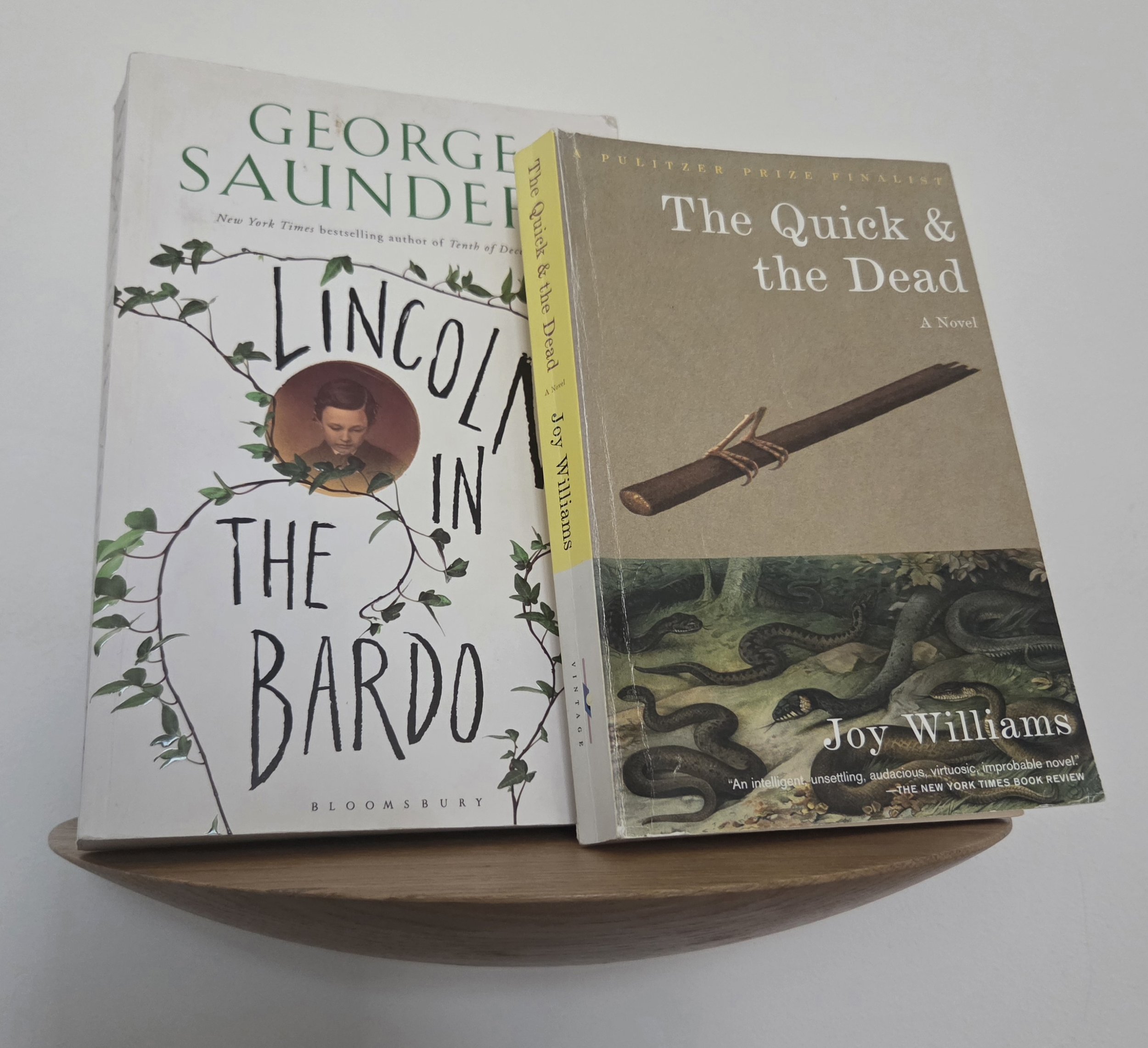
Lincoln in the Bardo, George Saunders, 2017.

This is a challenging but very fun novel. Entirely told in quotes, the story begins with the death of Lincoln’s son and goes on to explore grief, suffering, and loss on both sides of death: what happens to the living after death and where the dead go. In the novel the dead are in the bardo and provide the bulk of the story. They wrestle with their own losses (the living) and the challenge of moving on. In the cemetery where the story unfolds, Abraham Lincoln suffers extreme grief and there are plenty of eyewitness accounts of his behavior and his expressions of loss. A very intriguing subplot is the juxtaposition of Lincoln’s grief over the loss of his son and the loss of multitudes of soldiers during the Civil War. I found it to be one of the more interesting conversations in the story. But I also enjoyed many of the other conversations and debates in the novel. Lincoln in the Bardo was a great read, especially its mix of fiction and history (sometimes difficult to see their separation) and really cool experimental style.

The Quick & the Dead, Joy Williams, 2000.

Like Lincoln in the Bardo, this Williams novel is saturated with the dead, including a ghost, dead loved ones, the living dead of a nursing home, and a lot of dead animals. It is the background for the story of several adolescent girls making their way through the world seemingly alone: they experiment with environmentalism, silence, and privilege. Most of the adult characters are examples of ways not to live a life, souls filled with regrets, dissatisfaction, and bitterness. It is a beautiful story and incredibly well told by Williams. I’m looking forward to reading her most recent short story collection, The Pelican Child.
In BOOKS, FICTION, READING Tags novel, fiction, book review, books, grief
Comment

Reading List June 2026: Part 1

June 14, 2026 David H Weinberger

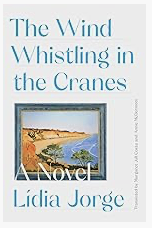
The Wind Whistling in the Cranes, Lidia Jorge, translated by Margaret Jull Costa and Annie McDermott. This is a Portuguese novel that takes place in Valmares, a fictional town along the Algarve coastline. It portrays two rival families: the owners of the town’s previous canning factory (the Leandro family) and working class immigrants from Cape Verde (the Matas family) who now reside in the abandoned factory. The main character Milene is a Leandro and her suitor, Antonino, is a Matas. It is a slow moving novel but still quite good. I became impatient with Milene’s slow decision making but the behavior fit her character well and as the novel developed I enjoyed her introspective tendencies and freewheeling spirit. While a lot of the story centers around the developing romance between these two characters, Jorge also explores postcolonial memory and consequences, racial antagonism, economic divisions, and the nature of evil. The novel also includes a strong sense of place, from the placement of the factory near the coast, to Milene’s inherited isolated home, from the Matas matriarch longing for Cape Verde to the Leandro’s desire to develop the property. Overall, an enjoyable read.

How The Wind Whistling in the Cranes informs my writing.

The novel’s sense of place is outstanding, something I often neglect in my stories. While setting is important in my writing, such as in my short stories Bluebird (a school bus) and Sorting Through Clams (a clamming boat), they could have been stronger had I been clearer about the importance of those places in the development of my characters. Jorge does that really well.

Jorge explores the nature of evil (something I am studying now) in her novel and I appreciate how she wove it into daily conversations and internal thoughts, rather than a blatant exposition about evil. It is masterfully done and nicely parceled out throughout the novel. It is what I am attempting with the novel I am currently writing and I will revisit Jorge’s success in implementing this skill.

Check out my stories in my collection Not So You’d Notice available at Amazon. Let me know how sense of place is used in Bluebird and Sorting Through Clams.

In BOOKS, FICTION, READING, WRITING Tags READING, writing, book review, short stories, novel, Not So You'd Notice
Comment

Reading List February 2026

March 10, 2026 David H Weinberger
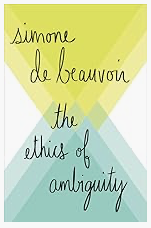
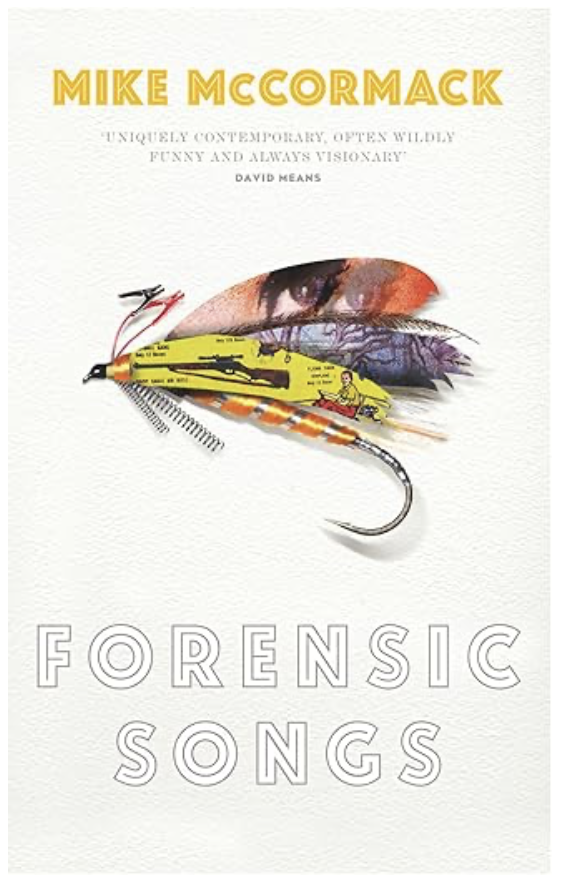
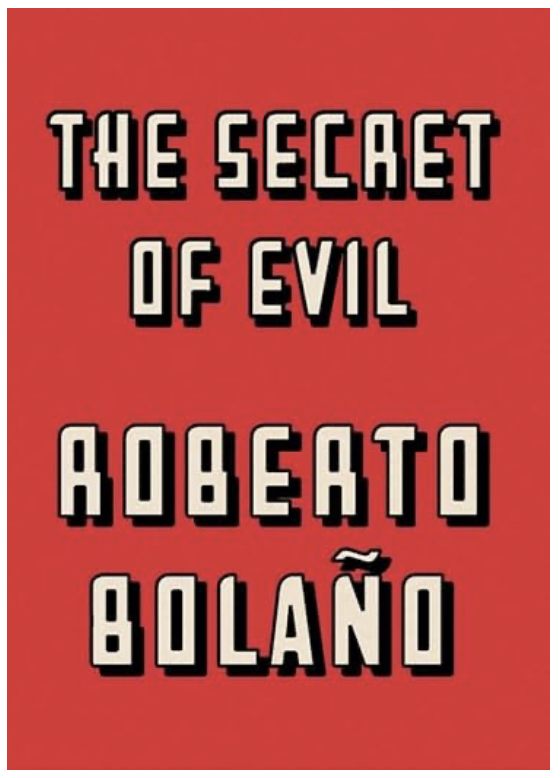
FebReads_Bolano.png FebReads_DeBeauvoir.png FebReads_Hooks.png FebReads_McCormack.png FebReads_Weiss.png

Like January, a mere five books read this month, however the Weiss and the de Beauvoir both took a lot of time and effort. Very impressed with the Weiss and have the second and third volumes on my ‘to read’ shelf.

·      The Ethics of Ambiguity, Simone de Beauvoir, translated by Bernard Frechtman.

·      The Secret of Evil, Roberto Bolaño, translated by Chris Andrews and Natasha Wimmer.

·      The Will to Change, bell hooks.

·      Forensic Songs, Mike McCormack.

·      The Aesthetics of Resistance: Volume I, Peter Weiss, translated by Joachim Neugroschel.

In BOOKS, FICTION, READING Tags reading list, reading, novel, philosophy, short stories
Comment

Solar Bones: Mike McCormack

January 30, 2025 David H Weinberger

This is the first I have read Mike McCormack and I am quite happy I learned about this exceptional one sentence novel. The story involves the civil engineer Marcus Conway as he waits for hours in his kitchen for his wife to return home. His reflections on his family, his community and his entire life unfold in a tidy stream of consciousness narrative which he envisions as a “memorial arc which curves from childhood to the present moment.” I enjoyed the way Conway’s engineering worldview allows him to deconstruct his world to ultimately discover the “harmonic order which underlay everyone and everything.”

The novel opens with the noontime ringing of the local Angelus Bell and introduces the entry of the wider world into Conway’s ruminations. The scene immediately put me in mind of the ringing bells throughout Krasznahorkai’s novel Satantango and mirrors a similar apocalyptic vision, though much more hopeful in the present novel. It did, however, set my mood for the reading and I could hear the Angelus Bell ringing on every page, perhaps calling folks to take stock of their lives and the values we choose to uphold.

I will read more McCormack based on how good this novel is, starting with his two short story collections. Such a pleasure becoming aware of this Irish author.

In READING Tags fiction, novel, Irish authors, book review
Comment

Jeferson Tenório: The Dark Side of Skin

January 18, 2025 David H Weinberger

This incredible novel, translated by Bruno Dantas Lobato and published by Charco Press, explores racial relations in Brazil. Though the black experience in Brazil is distinct from that in America I often found it uncanny how similar the situation seemed: the story could easily have unfolded in any-city USA.

The second person narrative is the ‘invented truth’ or the invented ‘memory of you’ as the narrator grieves the death of his father. Along the way the story deals primarily with systemic racism but also with family dynamics, hurt people and their search for happiness, and the daily struggle of walking out the door each morning. The characters attempt to love and be loved, some seriously challenged by their shortcomings, but for me they remained sympathetic.

Though a bleak and sobering story, I found it engaging and challenging, compassionate and frustrated. A wonderful depiction of the often damaging patterns we encounter in ourselves and in society. Highly recommended.

In READING, WRITING Tags book review, fiction, novel, English translation
Comment
Summary Block
This block is invalid. Please check the block settings and try again.
Featured
Aenean eu leo Quam

Powered by Squarespace