• About
  • Publications
  • Blog
  • Writing
  • Reading
  • Travel
Menu

David H Weinberger

Street Address
Exploring writing, reading, and traveling.
Phone Number
Engaging through stories.

Your Custom Text Here

David H Weinberger

  • About
  • Publications
  • Blog
  • Writing
  • Reading
  • Travel

Reading List June 2026: Part 1

June 14, 2026 David H Weinberger

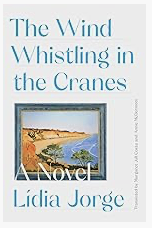
The Wind Whistling in the Cranes, Lidia Jorge, translated by Margaret Jull Costa and Annie McDermott. This is a Portuguese novel that takes place in Valmares, a fictional town along the Algarve coastline. It portrays two rival families: the owners of the town’s previous canning factory (the Leandro family) and working class immigrants from Cape Verde (the Matas family) who now reside in the abandoned factory. The main character Milene is a Leandro and her suitor, Antonino, is a Matas. It is a slow moving novel but still quite good. I became impatient with Milene’s slow decision making but the behavior fit her character well and as the novel developed I enjoyed her introspective tendencies and freewheeling spirit. While a lot of the story centers around the developing romance between these two characters, Jorge also explores postcolonial memory and consequences, racial antagonism, economic divisions, and the nature of evil. The novel also includes a strong sense of place, from the placement of the factory near the coast, to Milene’s inherited isolated home, from the Matas matriarch longing for Cape Verde to the Leandro’s desire to develop the property. Overall, an enjoyable read.

How The Wind Whistling in the Cranes informs my writing.

The novel’s sense of place is outstanding, something I often neglect in my stories. While setting is important in my writing, such as in my short stories Bluebird (a school bus) and Sorting Through Clams (a clamming boat), they could have been stronger had I been clearer about the importance of those places in the development of my characters. Jorge does that really well.

Jorge explores the nature of evil (something I am studying now) in her novel and I appreciate how she wove it into daily conversations and internal thoughts, rather than a blatant exposition about evil. It is masterfully done and nicely parceled out throughout the novel. It is what I am attempting with the novel I am currently writing and I will revisit Jorge’s success in implementing this skill.

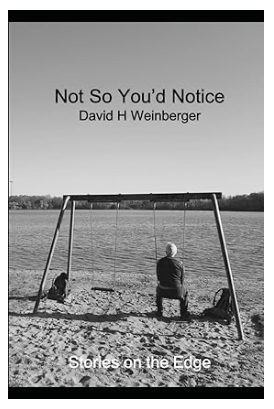
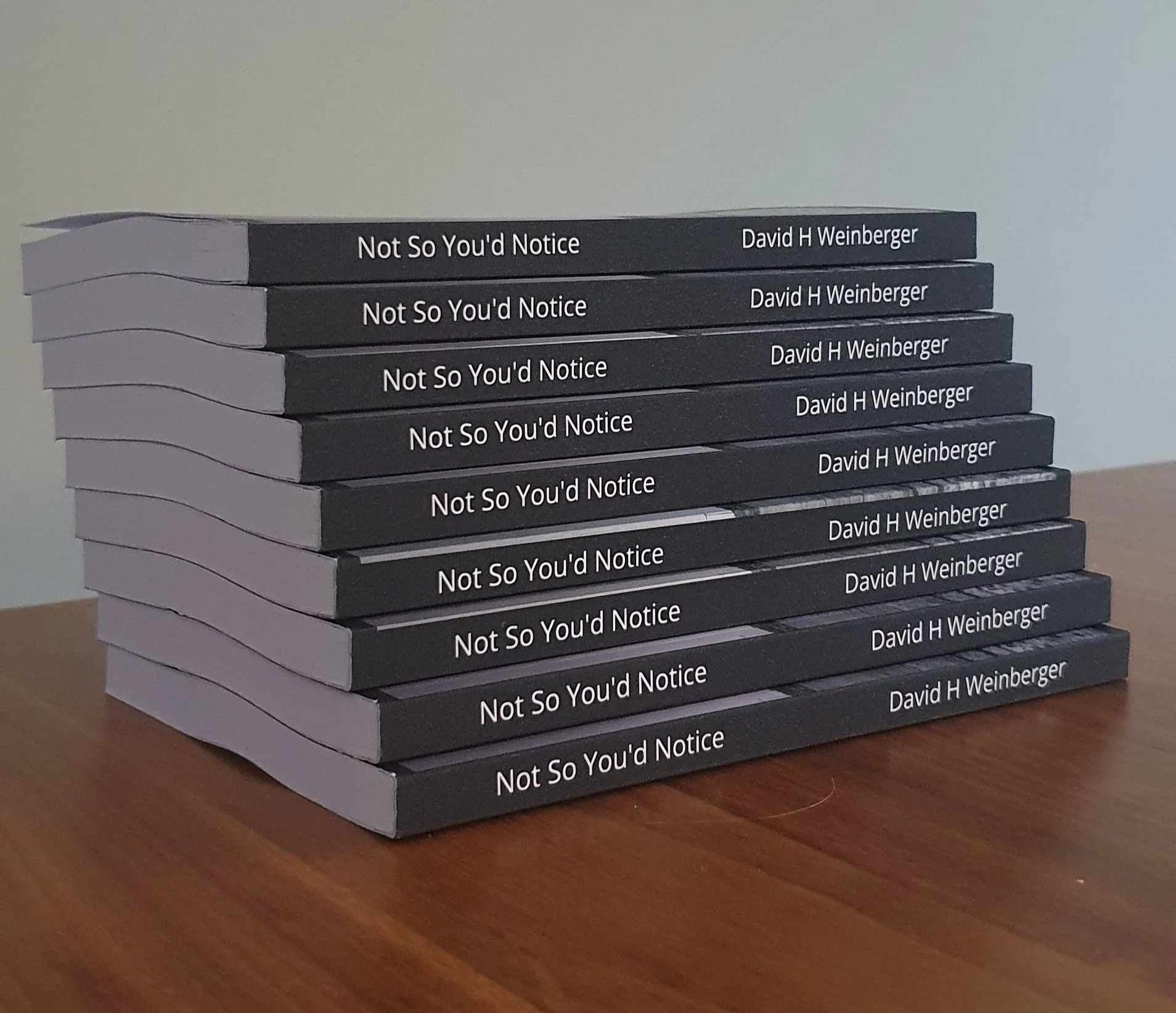
Check out my stories in my collection Not So You’d Notice available at Amazon. Let me know how sense of place is used in Bluebird and Sorting Through Clams.

In BOOKS, FICTION, READING, WRITING Tags READING, writing, book review, short stories, novel, Not So You'd Notice
Comment

Reading List May 2026

June 10, 2026 David H Weinberger
MayReads_Croft.png MayReads_Davis.png MayReads_Enriquez.png MayReads_Everett.png MayReads_Ishizawa.png MayReads_Tokarczuk.png MayReads_Whitehead.png

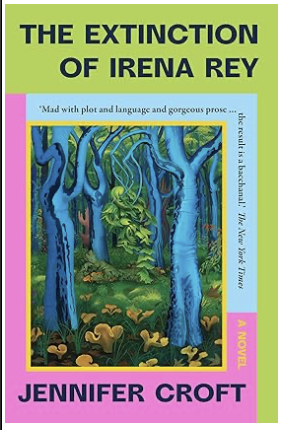
·      The Extinction of Irene Rey, Jennifer Croft. Fun novel centered on a cult-like group of translators representing different languages gathered together to translate their beloved author’s newest manuscript. Explores various extinction events from the smallest animals to large societies, including the extinction of particular human behaviors and preferences. As the translators struggle to understand their separate relationships with their author a mystery unfolds and drives the plot of the novel. Really nice exploration of identity and group personalities and our tendency to overlook flaws in people we admire.

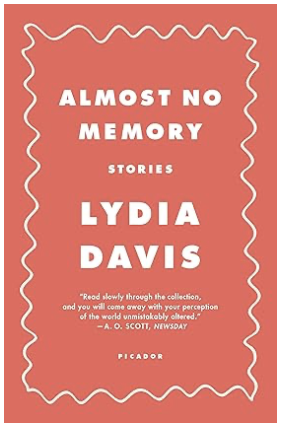
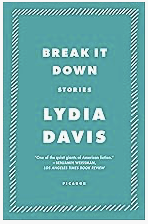
·      Break It Down: Stories, Lydia Davis. The copy I read is part of Davis’ giant The Collected Stories of Lydia Davis: I plan on reading each collection separately between some other works. These are quite short stories, there are 34 here, exploring the inner workings of their characters. I especially like the theme of ‘breaking it down’ where the characters analyze a situation to find meaning. Great narrative style and overall enjoyable reading.

·      A Sunny Place for Shady People, Mariana Enriquez, translated by Megan McDowell. The latest short story collection from Enriquez (Argentina) with her usual focus on horror. These stories are well-written and address interesting themes, such as responses to trauma and our relationship to the dead, and are populated with ghosts and hauntings. I appreciate the art of her storytelling but in the end the style does not appeal to me.

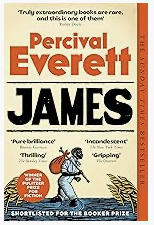
·      James, Percival Everett. A great retelling of James’ story, from Huckleberry Finn, from his point of view. Completely engrossing tale as James discovers his own identity after being oppressed as a slave and a black man. Essential reading when considering race relations in the United States and elsewhere.

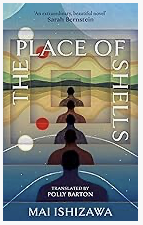
·      The Place of Shells, Mai Ishizawa, translated by Polly Barton. A novel investigating memory and the role of the past in our daily lives. I especially enjoyed Ishizawa’s discussion of masks and layers of multiple masks we wear, as well as the idea that memories and places wear masks too. The novel unfolds as a sort of stripping off of each character’s masks.

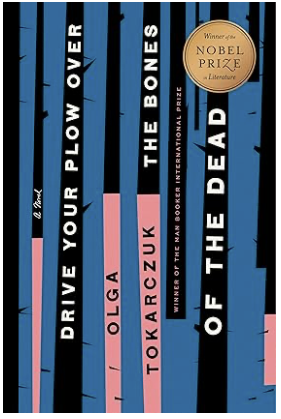
·      Drive Your Plow Over the Bones of the Dead, Olga Tokarczuk, translated by Antonia Lloyd-Jones. It was certainly worth my time and energy to read this novel a second time. Dead bodies, human and animal, frequently appear and the protagonist Janina, a beautifully developed character, gets involved in solving who is doing the murdering. A wonderful exploration of our relationship to the natural world, the origin of gentleness and cruelty, and the role of anger in addressing the wrongs of the world. Incredible read from an outstanding Polish author.

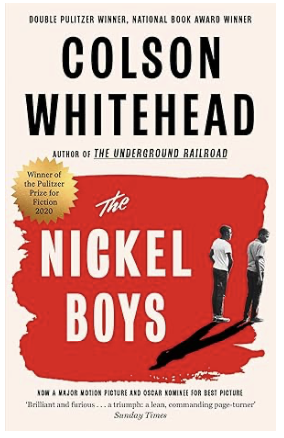
·      The Nickel Boys, Colson Whitehead. This is a completely enjoyable and intriguing novel. Centered in the black boy’s section of a reform home Whitehead explores brutality, hatred, and the exerted effort by many to thwart the progress of well-meaning individuals. One of my favorite lines, applicable to the perpetrators in the novel as well as those in our current administration is: ‘There was no higher system guiding Nickel’s brutality, merely an indiscriminate spite, one that had nothing to do with people.’ The ending of the novel was superb and brilliantly written.

In BOOKS, READING Tags fiction, short stories, literature, book review
Comment

Reading List April 2026

May 18, 2026 David H Weinberger
AprReads_Booker.png AprReads_Exley.png AprReads_Fonseca.png AprReads_Honek.png AprReads_Ohare.png AprReads_Weil.png

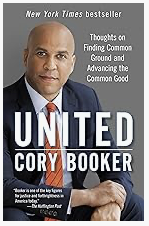
·       United, Cory Booker. A memoir covering Booker’s early social and political development with a cast of inspirational activists. His focus in on responsibility towards and connection with others. While the concept of empathy is taking a bruising these days, Booker applauds it and encourages it as a mainframe of ethical living. He acknowledges the privileges and opportunities he was granted simply by being born in the right place and the right time and suggests the concept of paying it forward as a means of paying the debts accrued from receiving these gifts. While I remain a cynic as far as how effective kindness can be in today’s toxic relational climate, I support living a life based on kindness in opposition to cruelty and self-centeredness, which is a main theme throughout this book.

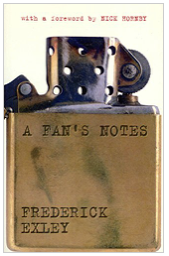
·      A Fan’s Notes, Frederick Exley. This novel was recommended to me by a friend and it sat on my shelf for years before I finally got around to reading it this month. It fits well alongside books by Henry Miller and Charles Bukowski. The main character, soured by life and alcoholism at an early age, splits his time between mental hospital stays and making a mess of his life and relations. Fairly routine situations albeit with a host of keen observations, my favorite being the following where the narrator is discussing the aggressors in World War II: ‘…my brother would in no time at all be in a rather ludicrous uniform of his own, with a few million other Americans called upon to pay the heavy toll for having failed to recognize insanity for the pernicious evil it is.’

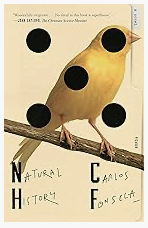
·      Natural History, Carlos Fonseca, translated by Megan McDowell. Natural History is a novel with a wide cast of characters and narrative points of view. The story encompasses art and science, politics and religion and explores the theme of identity, specifically repetition, camouflage, anonymity, and the masks we wear. Three related story lines, and perhaps a few minor ones, intersect in this wonderfully complex and engaging novel.

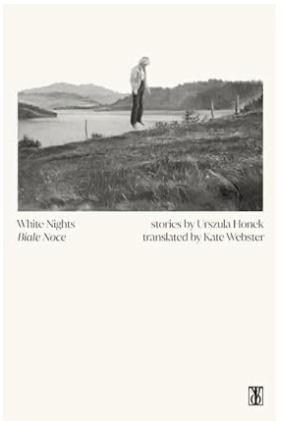
·      White Nights, Urszula Honek, translated by Kate Webster. A short story collection out of Poland that deals with a cast of characters surrounded by and enmeshed in death. I found the subject matter and the harsh living conditions described engaging, as well as the plight of the characters as they searched for a reason to go on living and a way out of their dismal environment. The best story in the collection is Hanna where the main character, in explaining the behavior of those around her, states “they’re not consumed by sorrow in a single moment, but throughout their lives…” Through somber and bleak prose these stories speak to the difficulty in rising above stark surroundings and fighting against ever-present brutality.

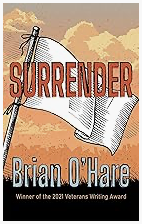
·      Surrender, Brian O’Hare. A collection of short stories with the Marines and soldiers at war as the backdrop for O’Hare’s exploration of what defines a man in America. A nice addition to my research into gentleness, the recurring cast of characters in these stories struggle with generational definitions of masculinity as they forge their own paths and make similar, sometimes unique mistakes of their own. Well worth reading while Trump and Hegseth push an aggressive war in Iran along with their ‘macho’ posing.

·      The Power of Words, Simone Weil, translated by Richard Rees and Arthur Wills. A powerful set of philosophical essays addressing the emptiness of words in social and political discourse. She suggests ways around this problem presenting what she finds are the ethics which should be guiding our lives. Incredibly topical arguments considering how the current administration hurls empty words and phrases at us (except for the inherent cruelty which lies behind those words and phrases).

In FICTION, READING, WRITING Tags novels, nonfiction, short stories, book review, gentleness, toxic masculinity
Comment

Reading List February 2026

March 10, 2026 David H Weinberger
FebReads_Bolano.png FebReads_DeBeauvoir.png FebReads_Hooks.png FebReads_McCormack.png FebReads_Weiss.png

Like January, a mere five books read this month, however the Weiss and the de Beauvoir both took a lot of time and effort. Very impressed with the Weiss and have the second and third volumes on my ‘to read’ shelf.

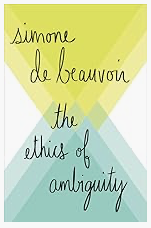
·      The Ethics of Ambiguity, Simone de Beauvoir, translated by Bernard Frechtman.

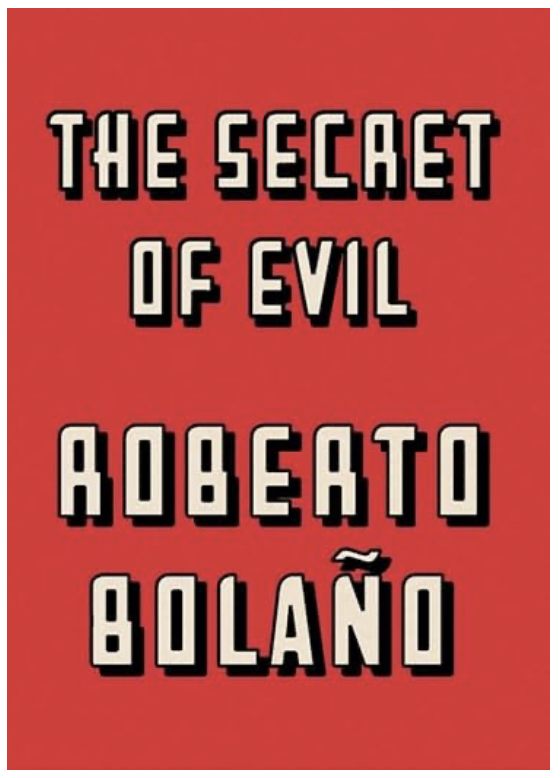
·      The Secret of Evil, Roberto Bolaño, translated by Chris Andrews and Natasha Wimmer.

·      The Will to Change, bell hooks.

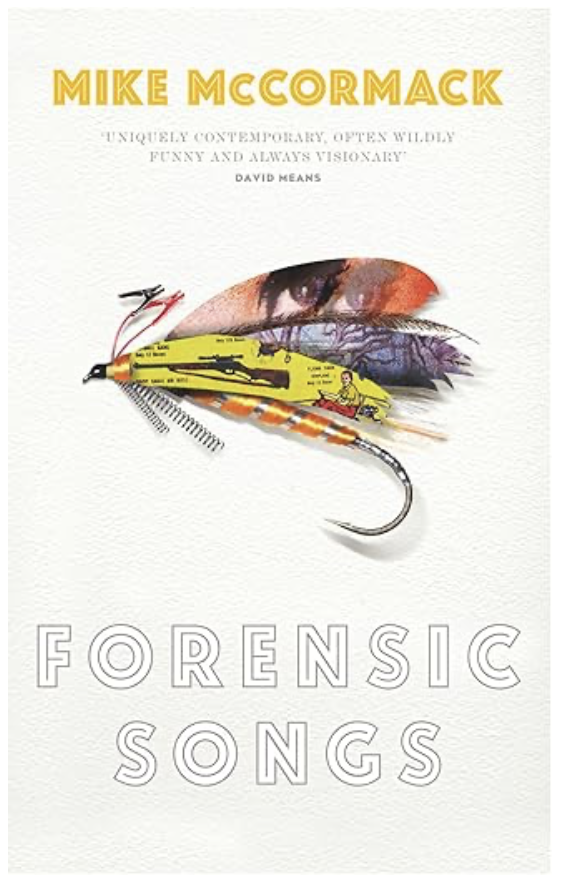
·      Forensic Songs, Mike McCormack.

·      The Aesthetics of Resistance: Volume I, Peter Weiss, translated by Joachim Neugroschel.

In BOOKS, FICTION, READING Tags reading list, reading, novel, philosophy, short stories
Comment

Reading List November 2025

December 2, 2025 David H Weinberger
NovReads_Ardern.png NovReads_Choo.png NovReads_Dufourmantelle.png NovReads_Mackenzie.png NovReads_Markson.png NovReads_Nye.png NovReads_Schweblin.png NovReads_Szalay.png

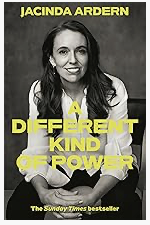
·      A Different Kind of Power, Jacinda Ardern. One of several books I am reading to make sense of the lack of gentleness in our world and my desire to see it practiced more widely. Ardern’s memoir discusses what she would later term empathetic leadership during her years as New Zealand’s prime minister. Beautiful story about the power of kindness over brutal and caustic social and political behavior.

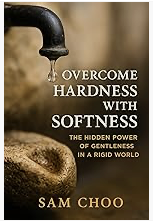
·      Overcome Hardness with Softness, Sam Choo. Nonfiction addressing gentleness, flexibility, and calm thought as a kind of strength. More of an overview of this approach than an in-depth analysis but nicely written with encouraging thoughts about the viability of gentleness.

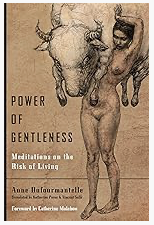
·      Power of Gentleness: Meditations on the Risk of Living, Anne Dufourmantelle, translated by Katherine Payne & Vincent Sallé. Dufourmantelle was a philosopher and psychoanalyst and provided an incredible account of gentleness in this brief text. She cogently discusses the power of gentleness and what a risk it is to live a gentle life: a risk she argues is worth taking. I will return to this amazing work sometime soon.

·      The Man of Feeling, Henry Mackenzie. I chose this book to understand how the author characterized gentleness. Written in the 18th century the story presents the protagonist’s gentleness as a virtue as opposed to the common view of gentleness as a weakness. Overall a decent story of one man’s life spent fiercely clinging to his empathetic approach towards others.

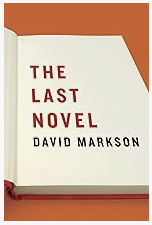
·      The Last Novel, David Markson. The conclusion to the trilogy includes more author notes and reminisces about artists and the creative process. A greater focus on death this time as the Novelist approaches his own. An enjoyable and challenging trilogy.

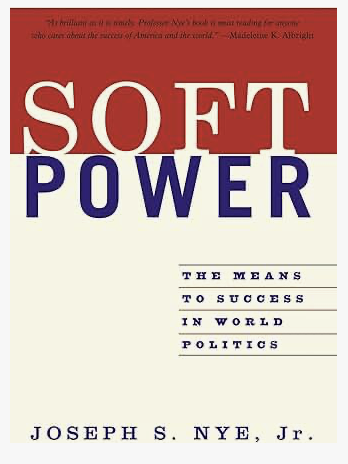
·      Soft Power, Joseph S Nye. Non-fiction explaining the role soft power plays in successful world politics, with emphasis on the United States. Written in 2004 so the data is outdated and much has changed in the world since then. Still, a useful text in my exploration of gentleness.

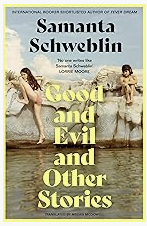
·      Good and Evil and Other Stories, Samanta Schweblin, translated by Megan McDowell. I could read Schweblin stories all day long. This collection explores the things we lose during our lifetimes, from our voices, to loved ones, to valuable relationships. In the end, the characters are left to themselves to understand their losses. Quite supreme!

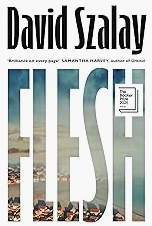
·      Flesh, David Szalay. Novel which just won the Booker Prize, I read it to see how Szalay presented the male voice, something many critics discussed. Another story of a man’s life, this time growing up in Hungary, emigrating to London, and finally returning to Hungary. The protagonist has very little to say so we learn about him from the situations he falls into, his successes and his failures. One of the main characters says about the protagonist Istvan he “represents a primitive form of masculinity” which I found to be an apt description of the character throughout the text.

In READING, BOOKS Tags novels, short stories, memoir, nonfiction, READING, literature
Comment

Reading List September 2025

October 23, 2025 David H Weinberger
SeptReads_Bolano.png SeptReads_Cardenas.png SeptReads_Hedges.png SeptReads_Markson.png SeptReads_RiveraGarza.png SeptReads_Slesinger.png

·      Last Evenings on Earth, Roberto Bolaño, translated by Chris Andrews & Natasha Wimmer. The first of four Bolaño short story collections I plan on rereading. Struggling and failed writers populate these incredible stories. These are downtrodden exiled characters and there is a continual threat of violence which propels the narratives.

·      American Abductions, Mauro Javier Cárdenas. This novel from Ecuador is set in America in the near future but closely resembles the present despite its technological advancements. The novel explores the psychological and physical stress caused by the deportations of Latin Americans living and working in the USA. Frightening but intriguing experimental writing.

·      America: The Farewell Tour, Chris Hedges. Hedges nonfiction book examines what he sees as America’s decline with chapters addressing hate, work, freedom, addiction and more. Sober reading providing an interesting analysis of the main culprit, the corporate state.

·      Vanishing Point, David Markson. A continuation of Markson’s This is Not a Novel with a deeper focus on impending death. Presented as notes Author has collected on index cards mainly about the challenges of creative life. Looking forward to the final novel.

·      Death Takes Me, Christina Rivera Garza, translated by Sarah Booker & Robin Meyers. A literary crime narrative out of Mexico involving gendered violence and deeply steeped in an exploration of poetry. Incredible experimental writing.

·      Time: The Present, Tess Slesinger. Selected stories from Slesinger writing from the 1930’s. There are a handful of extremely excellent stories in this collection but overall I was impressed with Slesinger’s exploration of gender relations, worker exploitation, and race politics through her modernist style.

In BOOKS, FICTION, READING Tags novels, short stories, nonfiction, read, book review
Comment

Tiny Points of Contact: My Latest Publication

October 19, 2025 David H Weinberger

Ivo Review cover: Issue One: Connections

My newest publication has dropped at Ivo Review. Tiny Points of Contact was included in their first themed issue exploring Connections. The story was inspired by a kayak trip I took decades ago observing manatees in the mango groves of Florida. I rewrote it several times and it is awesome to see it finally find a home. I hope you enjoy reading it as well as the other stories and poems in Ivo Review.

In FICTION, READING, WRITING Tags connections, short stories, literature, literary journals, manatees, dogs
Comment

Criminalizing Words: Playing at Cruelty

September 22, 2025 David H Weinberger

Not So You’d Notice story collection

I first began writing Playing at Cruelty between 2018 and 2019 in response to the executive orders and policies of the presidential administration. I imagined the things that could go wrong in the country with the push to curtail guaranteed freedoms and came up with this story. I reread it this weekend thinking about the current administration’s aggressive assault on freedom of speech and thought the storyline of Playing at Cruelty is not so farfetched. You can read the story in my collection Not So You’d Notice available at Amazon.

In READING, BOOKS, WRITING Tags READING, freedom of speech, short stories, social commentary, fiction
Comment

New Publication! Tiny Points of Contact

September 8, 2025 David H Weinberger

Ivo Review Website

Ivo Review has accepted my story Tiny Points of Contact for October publication. They are including the story in their first issue titled Connections. I’m so pleased to be included in this journal and am looking forward to seeing Tiny Points of Contact online sometime in October.

I wrote this story in 2015 and first submitted it in 2016. I have received over 60 rejections and have done at least four major rewrites, as well as reading an excerpt at an open mike night. I’ve liked the idea of this story since the beginning so I persevered with it and kept rewriting and submitting. Very glad to see it finally receive a publication.

In FICTION, READING, WRITING Tags READING, writing, short stories, publication, connections
Comment

Reading List August 2025

September 3, 2025 David H Weinberger
AugReads_Homes.png AugReads_Markson.png AugReads_Martin.png AugReads_Moliere.png AugReads_Molina.png AugReads_Ross.png AugReads_Sittenfeld.png AugReads_Topol.png

·      May We Be Forgiven, A.M. Homes. An enjoyable novel exploring our inner lives and asking how we manage to survive each day and the challenges that appear. Quite fun to watch the growth of the protagonist.

·      This is Not a Novel, David Markson. A barrage of thoughts about the creative process, creative individuals, death, and including something that could be called a storyline. First in a trilogy. Looking forward to the next two.

·      Cool For America, Andrew Martin. A short story collection with lots of writers, music, booze. and drugs. Some fun along the way but grows weary with repetition.

·      Tartuffe and The Misanthrope, Molière, translated by Maya Slater. Very humorous drama pieces I read as part of research for the hypocrisy story I am currently writing.

·      To Walk Alone in the Crowd, Antonio Muñoz Molina, translated by Guillermo Bleichmar. A nice look at solitude amongst other people. Mostly containing thoughts while walking through cities, it is a cool exploration of mindfulness while exploring the world around us.

·      Oreo, Fran Ross. A great romp through seventies Philadelphia and New York while exploring race and family relations. Written in 1974 but still highly applicable.

·      Show Don’t Tell, Curtis Sittenfeld. Short stories featuring middle-aged characters mining their pasts to understand their current situations.

·      A Sensitive Person, Jachym Topol, translated by Alex Zucker. Always a pleasure to read another Topol novel from the Czech Republic. This one is a wild road novel beginning during an acting tour in Europe and then a return to Prague. Lots of absurd encounters with a cast of characters and explorations of current politics and other concerns.

In BOOKS, FICTION, READING Tags novels, short stories, nonfiction, read
Comment
Older Posts →
Summary Block
This block is invalid. Please check the block settings and try again.
Featured
Aenean eu leo Quam

Powered by Squarespace