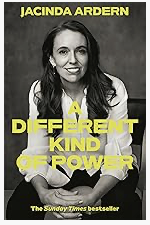

· A Different Kind of Power, Jacinda Ardern. One of several books I am reading to make sense of the lack of gentleness in our world and my desire to see it practiced more widely. Ardern’s memoir discusses what she would later term empathetic leadership during her years as New Zealand’s prime minister. Beautiful story about the power of kindness over brutal and caustic social and political behavior.
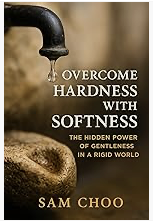
· Overcome Hardness with Softness, Sam Choo. Nonfiction addressing gentleness, flexibility, and calm thought as a kind of strength. More of an overview of this approach than an in-depth analysis but nicely written with encouraging thoughts about the viability of gentleness.
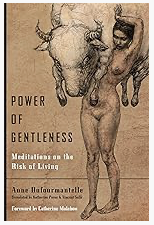
· Power of Gentleness: Meditations on the Risk of Living, Anne Dufourmantelle, translated by Katherine Payne & Vincent Sallé. Dufourmantelle was a philosopher and psychoanalyst and provided an incredible account of gentleness in this brief text. She cogently discusses the power of gentleness and what a risk it is to live a gentle life: a risk she argues is worth taking. I will return to this amazing work sometime soon.
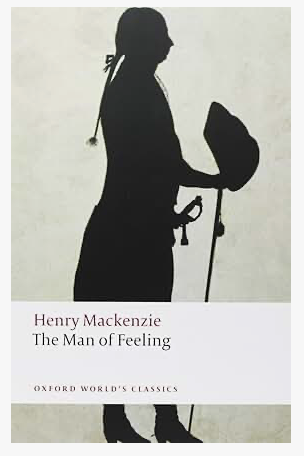
· The Man of Feeling, Henry Mackenzie. I chose this book to understand how the author characterized gentleness. Written in the 18th century the story presents the protagonist’s gentleness as a virtue as opposed to the common view of gentleness as a weakness. Overall a decent story of one man’s life spent fiercely clinging to his empathetic approach towards others.
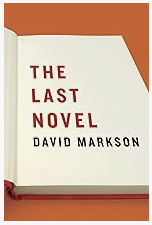
· The Last Novel, David Markson. The conclusion to the trilogy includes more author notes and reminisces about artists and the creative process. A greater focus on death this time as the Novelist approaches his own. An enjoyable and challenging trilogy.
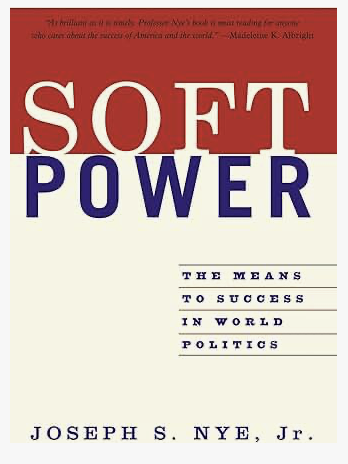
· Soft Power, Joseph S Nye. Non-fiction explaining the role soft power plays in successful world politics, with emphasis on the United States. Written in 2004 so the data is outdated and much has changed in the world since then. Still, a useful text in my exploration of gentleness.
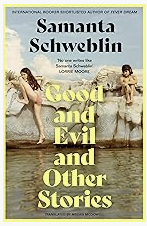
· Good and Evil and Other Stories, Samanta Schweblin, translated by Megan McDowell. I could read Schweblin stories all day long. This collection explores the things we lose during our lifetimes, from our voices, to loved ones, to valuable relationships. In the end, the characters are left to themselves to understand their losses. Quite supreme!
· Flesh, David Szalay. Novel which just won the Booker Prize, I read it to see how Szalay presented the male voice, something many critics discussed. Another story of a man’s life, this time growing up in Hungary, emigrating to London, and finally returning to Hungary. The protagonist has very little to say so we learn about him from the situations he falls into, his successes and his failures. One of the main characters says about the protagonist Istvan he “represents a primitive form of masculinity” which I found to be an apt description of the character throughout the text.
