Death With Interruptions

Death With Interruptions José Saramago (Portugal): 2005; translated by Margaret Jill Costa, 2008.

3174VIm0olL._SX328_BO1,204,203,200_.jpg

Saramago's 2005 novel is a fable where death ceases to occur one New Year's Eve. It seems like two novellas spliced together, albeit with continuities between the two pieces. The first half has a more societal level examination of what would occur should people stop dying. This half contains some astute observations on the ramifications of this occurrence, with plenty of humour to move the story along. 

The second half contains a more individual perspective as it explores a situation involving a cellist who does not die and his relationship to death. This half has more the feel of an independent short story without not enough provided to connect it to the novel as a whole or to propel the fable. Still, it is a good short story in spite of its typical male/female relationship struggles. The novel as a whole, was good reading but not nearly as good as Saramago's Blindness.
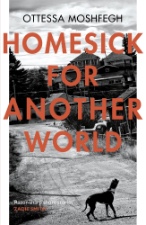
Homesick for Another World

Homesick for Another World Ottessa Moshfegh (USA): 2017.

fullsizeoutput_1f.jpeg

This is a wonderful collection of 14 short stories dealing with personal degradation, loss, and striving for connection. They are all quite bleak, yet immensely entertaining and satisfying. None of the stories contain an overriding plot to keep the story moving, it is simply a picture of a life or lives, and consequences to decisions people make in a lifetime and day to day. The stories remind me of the better ones from Lucia Berlin that I have enjoyed so much.

The final story, "A Better Place," is a bit different than the rest but also summaries all the others quite well. It captures the essence of the title of the collection and explores our desires for someplace better through the eyes of two small children. Again, there is no ultimate resolution, but one is left, like in the other collected stories, wondering what keeps us coming back for more, dealing with our defects, and carrying on another day. Highly recommended.


The New Sweet Style

The New Sweet Style by Vassily Aksyonov (Soviet Union): 1999; translated by Christopher Morris, 1999.

0679444017.jpg

I am not a trained literary critic or book reviewer, however, I do read quite a bit. In order to keep this blog more 'live' I am going to offer my amateur thoughts concerning the books I read. Most of them are books in English translation, but there is a scattering of books written in English, especially short stories as that is my focus for this year. And so, lets start with The New Sweet Style

I have read other books by Askyonov, specifically, The Winter's Journey, Generations of Winter, The Island of Crimea, and The Burn. all of which are worthy of reading time. So is this current book, which is almost two decades old. His coverage of the happenings in Russia and in the United States at the time resonate in today's political and social world. Things haven't actually changed that much. The book is a fairly difficult read but enjoyable all the same. The main character, Alexander Korbach, is a likeable man with a plentitude of talents, which help him negotiate the difficulties he has in Russia and during his emigration and settlement in America. The author moves around in time and point of view frequently, and also introduces several metafictional techniques throughout the novel. While some scenes and outcomes are predictable or drawn out, the overall narrative is fast-paced, fun, and stimulating.

The final section of the book (Part XII), with four short chapters, I found to be the weakest and least enjoyable of the novel. Characters go through some strange transformations and a general lunacy takes over until the conclusion, where all the characters from the book reunite. Still, in spite of the less than satisfying ending, this is a strong, challenging, and pleasant read.

Favourite Reads 2017

Below is a list of my favourite reads of 2017. All but one are novels or story collections translated into English; the last one is a collection of short stories from the US. I did not plan on a top ten, it just worked out that way. I track my reading and favourites throughout the year so each year I could end up with zero or many more favourites. So, for 2018, try a few of the listed books. 

20180102_150255.jpg
  • Don't Leave Me (Dalkey Alchive) Stig Saeterbakken; Translated by Sean Kinsella; Norway
  • Moment of Freedom (Norvik Press) Jens Bjornboe; Translated by Esther Greenleaf Mürer: Norway
  • Powderhouse (Norvik Press) Jens Bjornboe; Translated by Esther Greenleaf Mürer: Norway
  • The Silence (Norvik Press) Jens Bjornboe; Translated by Esther Greenleaf Mürer: Norway
  • Baboon (Two Lines Press) Naja Marie Aidt; Translated by Denise Newman; Denmark
  • Rock, Paper, Scissors (Open Letter) Naja Marie Aidt; Translated by K.E. Semmel; Denmark
  • The Mighty Angel (Open Letter) Jerzy Pilch; Translated by Bill Johnston; Poland
  • Home (Open Letter) Leila S. Chudori; Translated by John H. McGlynn; Indonesia
  • Antón Mallick Wants to be Happy (Hispabooks) Nicolás Casariego; Translated by Thomas Burnstead; Spain
  • A Manual for Cleaning Women (FSG) Lucia Berlin; USA

2017 Reading Stats

The year is coming to a close and I am on my last 700 page book. I read 111 books this year, down slightly from the past two years. Ninety-eight of the books were translated into English. I added some new countries, such as Tunisia and Congo, while 8% were from France, 10% from Mexico, 12% from USA (mostly nonfiction), 13% from Spain, and 14% from Norway (my focus for the year). I read one trilogy a month, mostly Scandinavian, and unfortunately neglected short stories. I will remedy this next year. Female authors represented 32% of the total, a bit higher than the publishing total. I did not track gender of translators, but my guess is it is a match between male and female, if not dominated by females (my guess). Overall, a great year of reading. Looking forward to some great reading in 2018.

20171226_181022.jpg

Seagull Books

Another outstanding publisher is Seagull Books out of Calcutta, India. They were founded in 1982 as an Indian publishing house, focusing on Indian theatre and art. Since early 2000, they have been releasing English translations from around the world, and now have quite an impressive catalog. They have a wide range of genres, but I focus on their literature, the picture below showing the books I have from them so far (except for the two I ordered this morning). While I have enjoyed all their books I have read, I am especially pleased that they publish some of my favourite authors, such as Hungarian László Krasznahorkai, and Austrians Thomas Bernhard and Elfriede Jelinek. While their focus is on extraordinary authors, their books are also beautifully crafted and a pleasure to look at and hold. 

20171101_121921.jpg

Margellos World Republic of Letters

Margellos World Republic of Letters is a small press out of Yale University. They produce incredibly interesting works in English translation from around the world. They publish old works in new translations, as well as translations of contemporary authors. Of interest is the French trilogy by Michel Leiris, several works by Romanian Norman Manea, the quite intriguing 'Cyclops' by Croatian Ranko Marinkovic, and a collection of works by Patrick Modiano. One of my favourite reads of 2017 is 'Melancholy' by Hungarian László Földényi. Quite a bit in their inventory I need to get to.

My small collection of Margellos books.

My small collection of Margellos books.

Three Lives & Company

Three Lives & Company is an incredible independent bookstore in NYC that I frequented when I lived in the states. I have been using a bookmark from them from my last visit over 12 years ago. While I read about 120 books a year, that adds up to many books and pages the bookmark has kept for me. My friend Jan just recently visited the bookstore and sent me a new bookmark, free of smudges, rips, and tears. I don't know if I can use it. I may have to put it in safe keeping and continue using the old one.

Old, and quite dependable and loved, and new.

Old, and quite dependable and loved, and new.

Hispabooks

I am constantly impressed by the books Hispabooks Publishing releases. Last year I posted about three of their books which made it to my 2016 Favorite Reads list. This year, I have already read several that I recommend. Antón Mallick Wants to be Happy, Martutene, Landing, and The Birthday Buyer stand out as favorites this year. Hispabooks has been publishing out of Madrid since 2011. They publish only writers based in Spain and have quite a collection of worthwhile titles. 

My Hispabooks collection so far. Still a few in the catalog I need to buy.

My Hispabooks collection so far. Still a few in the catalog I need to buy.

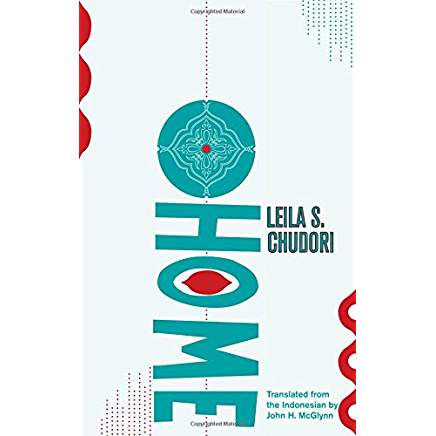
Home

Home by Leila S. Chudori, from Indonesia, and translated by John H. McGlynn, is my monthly favourite read. It is published by Deep Vellum Press, which is how I became aware of it. Chudori deals with love, identity, and the concept of home. Home is represented by where the characters live for different reasons, as well as where they wish to live, both in their current lives and when they die. The novel is a great mix of politics, personal relationships, and the search for a space to be oneself in today's world. A bit simple in some sections, but overall a tremendous read.